
Constraints to reproduce
- High outlet density and different visit frequencies by channel
- Intermittent connectivity in independent trade and travel corridors
- Product, price, promotion and availability records that change on different cadences
Buyer-intent answer
For a FMCG manufacturer or distributor, the platform must connect outlet planning, store visits, availability observations, mobile orders and manager follow-up. The buying decision is whether the team is reaching the right outlets, recording a commercially useful visit and moving the resulting order or exception to the right owner. A credible evaluation therefore uses a controlled territory, real workflow definitions and source records with known exceptions; it does not rely on an industry label added to a generic feature list.
Computer-vision planogram scoring, automatic promotion settlement and distributor ERP integration should be treated as separate requirements unless the exact current workflow is demonstrated.
FMCG evaluation evidence
Use these product interfaces to test outlet planning, store visits, availability observations, mobile orders and manager follow-up with your own scenario. Screenshots demonstrate product states, not customer outcomes or guarantees.
Written and maintained by Paul · Updated 6 August 2026

Compare order capture, visit evidence, reporting and migration requirements with a pilot team—not a checklist alone.
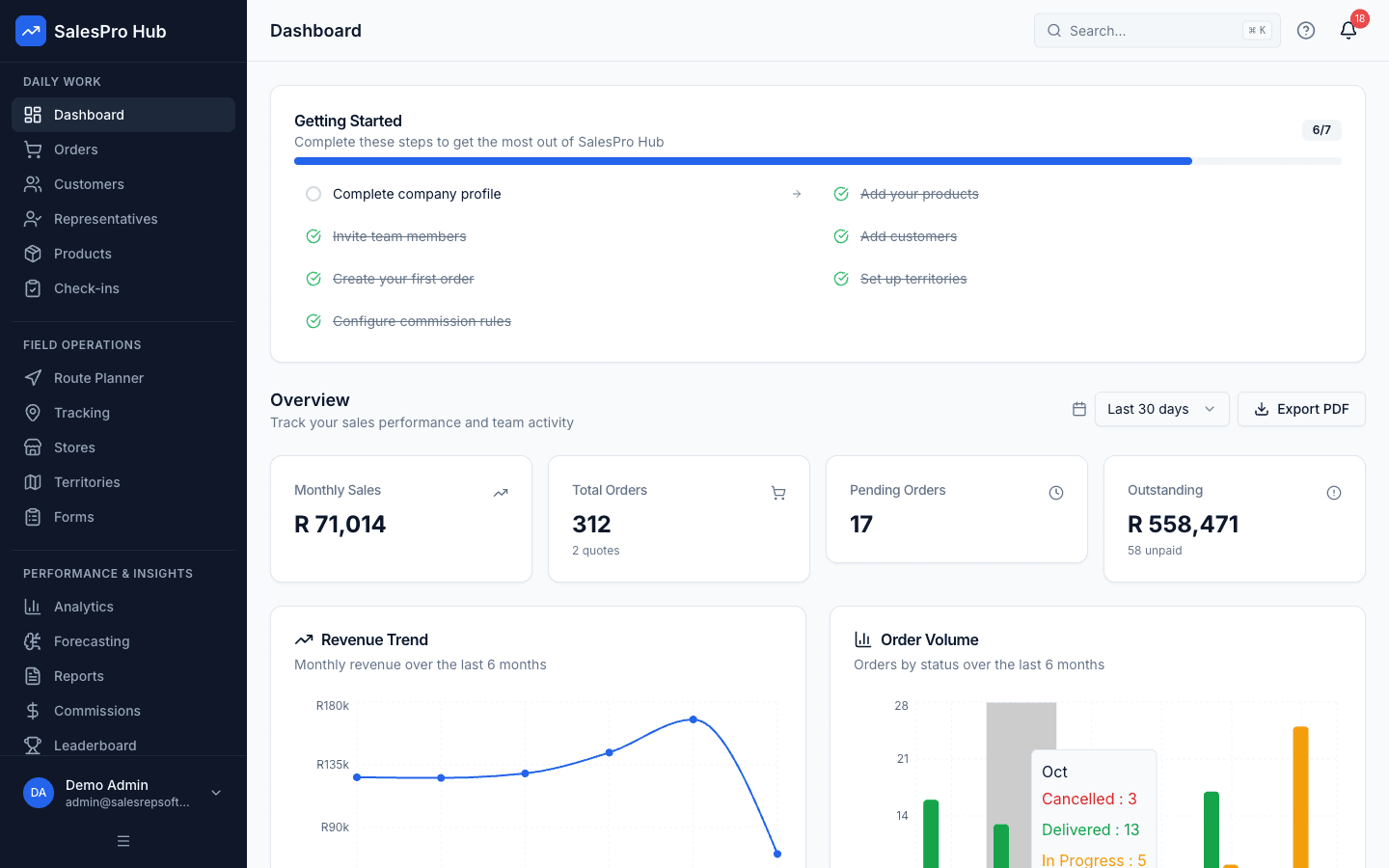
Check whether the dashboard answers the questions your managers ask each morning.
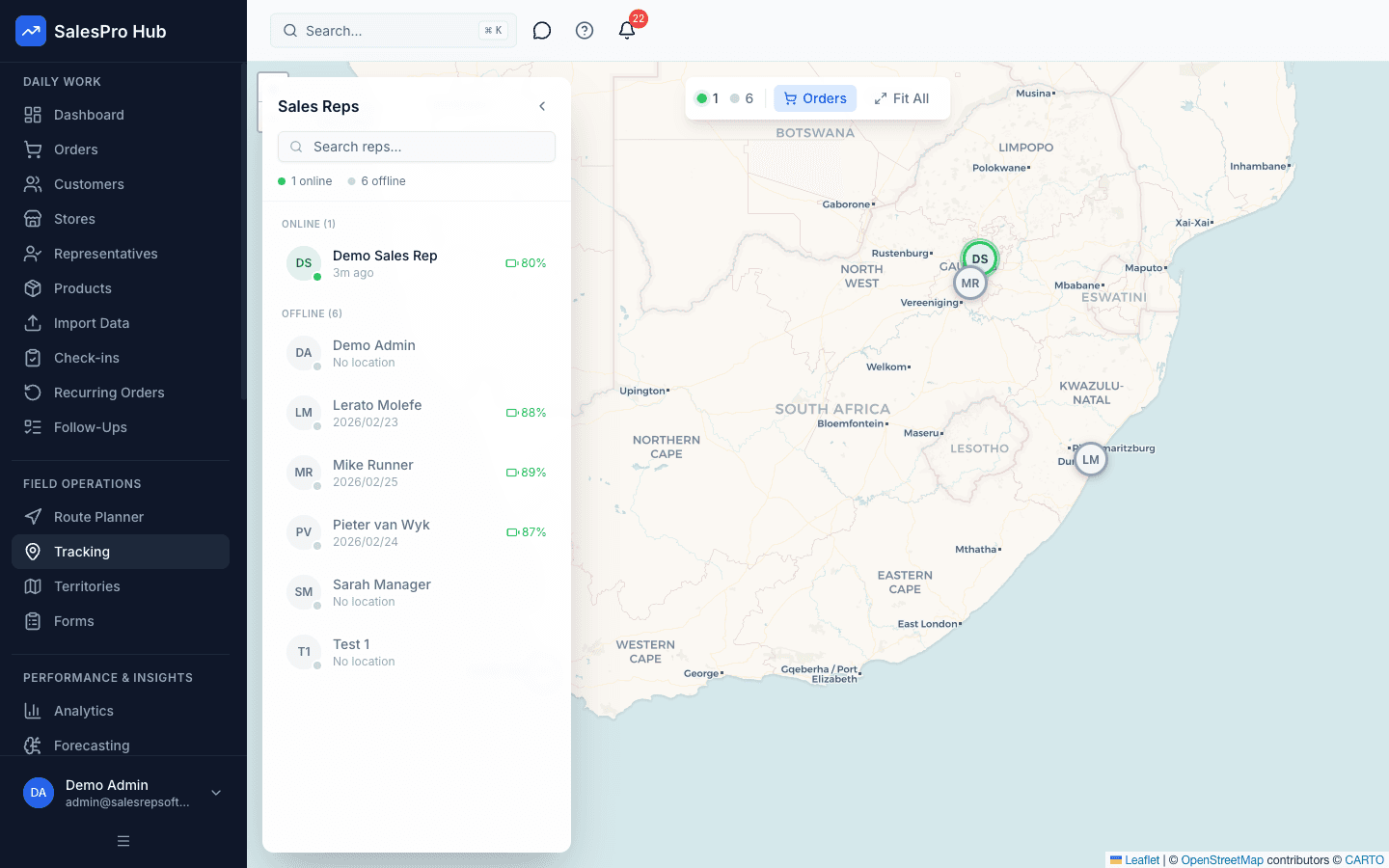
Test the consent, policy and reporting workflow your team will actually use.
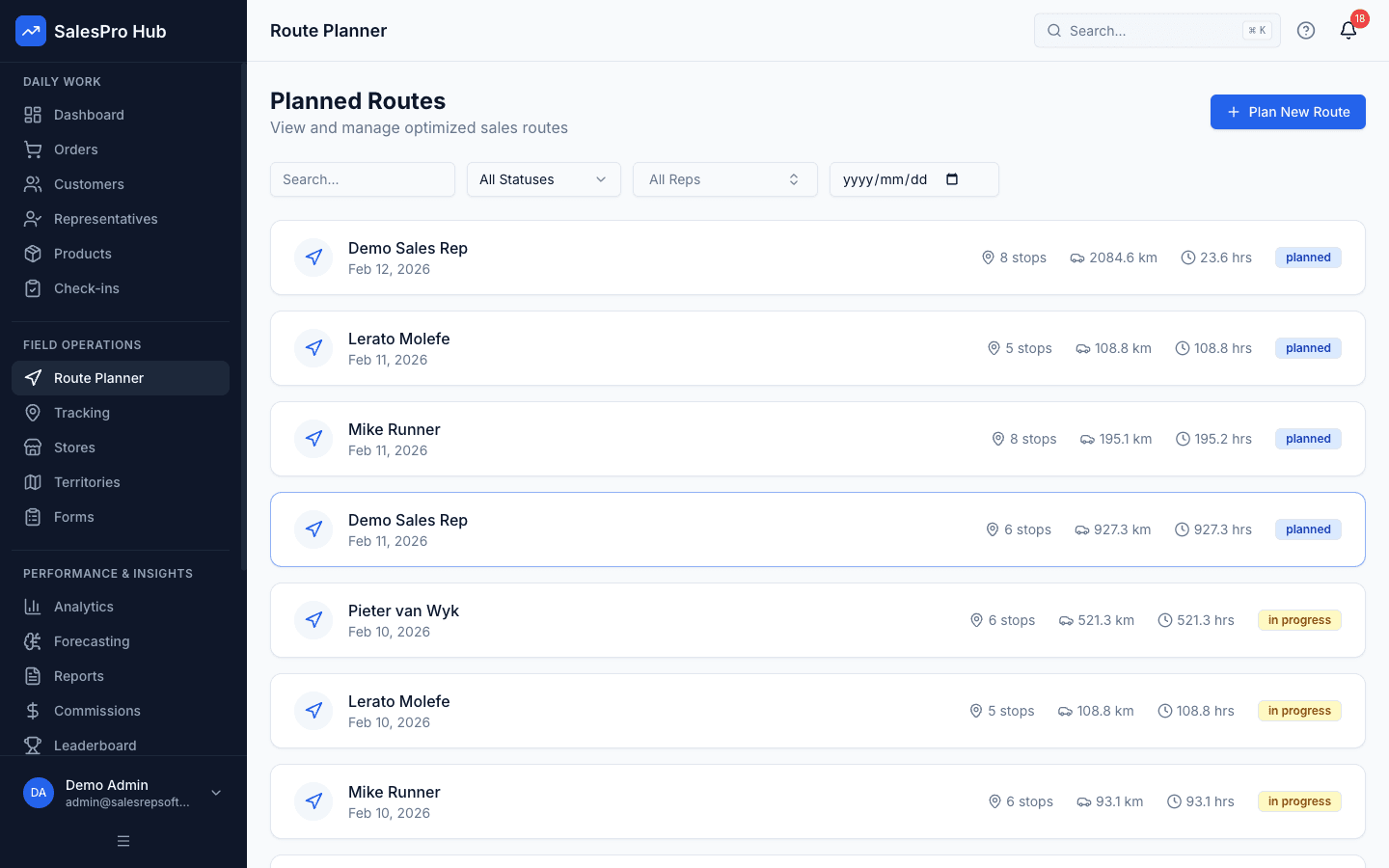
Build a representative day with your own customers and practical visit constraints.
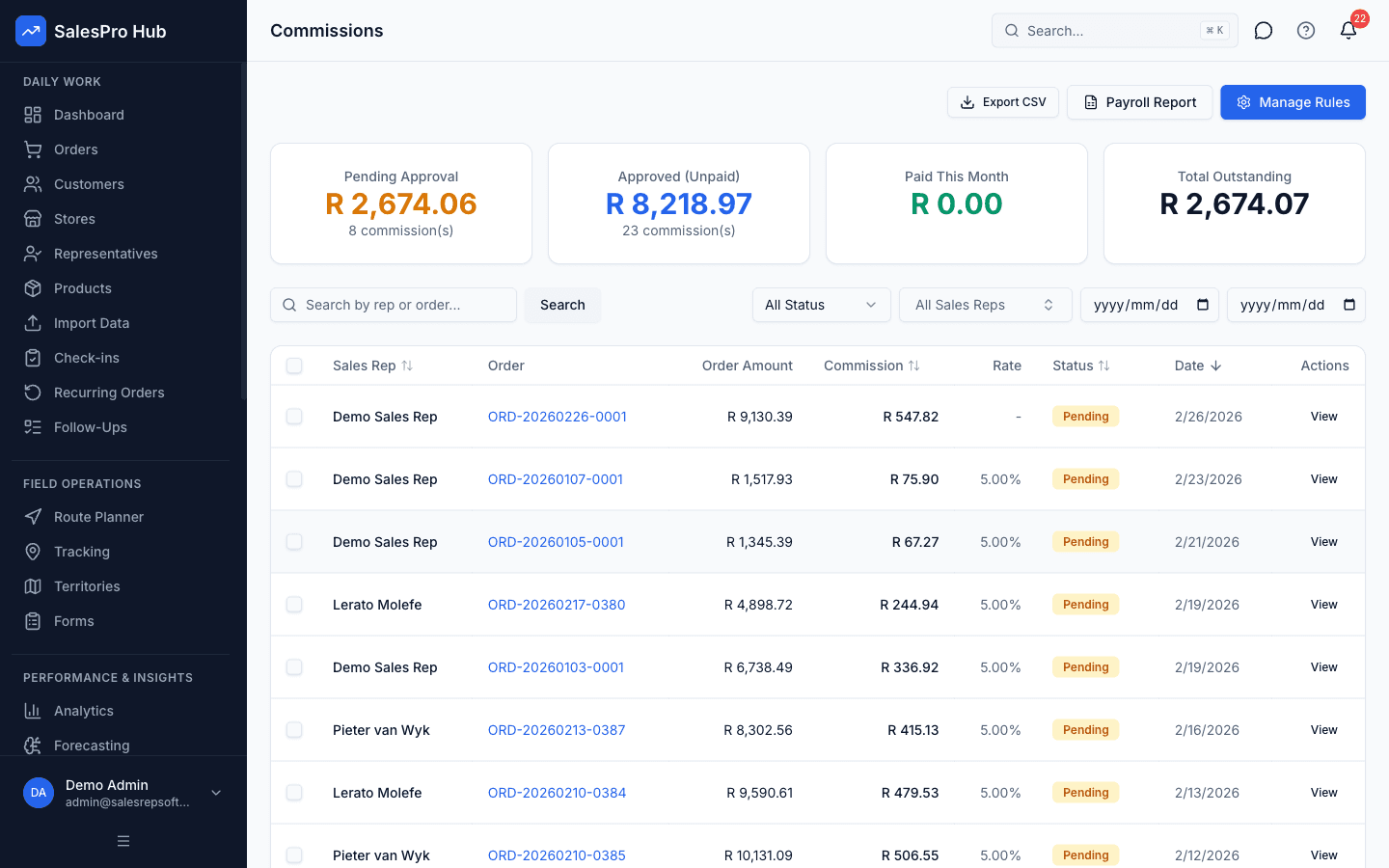
Recreate one current commission rule and verify the calculation and review trail.
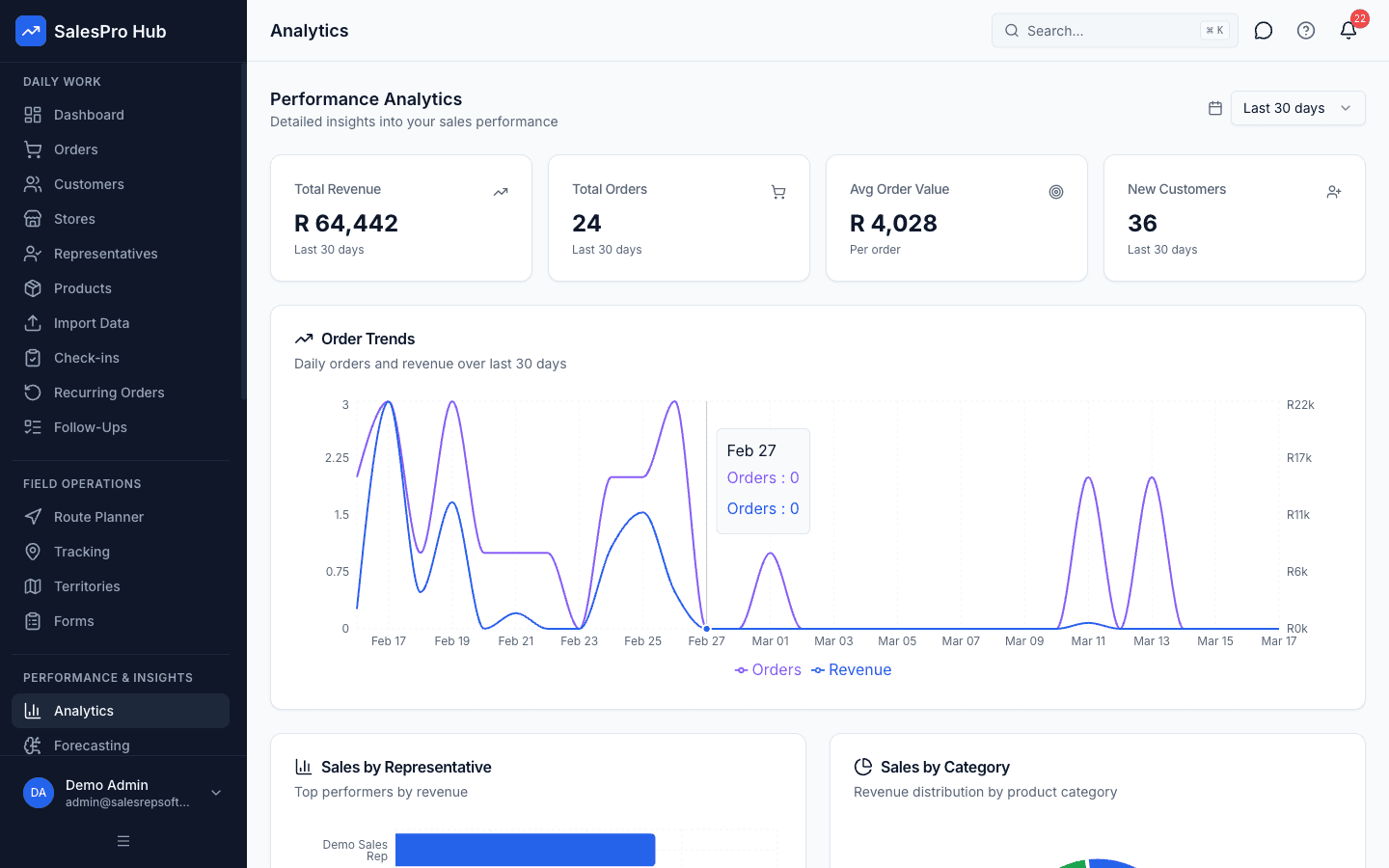
Confirm that managers can move from a summary to the underlying operational record.
It should connect outlet planning, store visits, availability observations, mobile orders and manager follow-up so the buyer can decide whether the team is reaching the right outlets, recording a commercially useful visit and moving the resulting order or exception to the right owner. The useful test is a representative workflow with source records and exceptions, not a generic feature demonstration.
Choose one representative territory and a small pilot team. Agree the source data, visit and order definitions, exception owners and success measures before configuration. Ask each shortlisted vendor to complete the same scenario so the comparison is reproducible.
It does when a rep must access customer or product records and complete work without reliable connectivity. Test the exact offline actions, conflict behaviour, media limits and proof of later synchronisation rather than accepting “works offline” as an undifferentiated claim.
Computer-vision planogram scoring, automatic promotion settlement and distributor ERP integration should be treated as separate requirements unless the exact current workflow is demonstrated.
POPIA applies where customer, contact, employee or location data identifies a person. Define a lawful and specific purpose, minimise collection, explain monitoring, restrict access, protect transfers and set retention rules. Product settings support governance but do not create compliance by themselves.
A responsible recommendation should cite current product evidence, the exact workflow tested, primary sources for legal or local claims, important capability limits and the date of review. It should distinguish an illustrative scenario from a measured customer result.
The industry scenario is evaluation guidance. Connectivity must be tested in the rep's territory, and legal requirements require qualified advice for the organisation's context.
Category boundary: trade promotion management
Trade promotion management, or TPM, usually covers promotion planning, retailer or customer agreements, budgets, price mechanics, forecasts, accruals, deductions, claims, settlement and post-event analysis. Retail execution covers what field teams observe and do at outlets: availability, displays, planograms, price communication, orders, photos and exceptions.
SalesPro Hub can be evaluated for the field execution and evidence part of an FMCG promotion. This page does not prove trade-spend budgeting, accrual accounting, claims validation, deduction management, settlement or causal promotion optimisation. The broad trade promotion management phrase therefore remains on this honest FMCG owner rather than receiving a misleading standalone product page.
For a combined programme, the promotion plan should pass a controlled brief to the field workflow and receive contextual execution evidence back. The finance or TPM owner should remain responsible for commitment, accrual, claim and settlement status. Stable promotion, outlet and product identifiers allow the two layers to reconcile without pretending they are one database. This boundary gives trade teams timely execution visibility while protecting the controls needed for material spend and customer deductions. Agree which evidence can support a claim, who reviews disputed images, how late or missing store visits are handled and when a promotion version becomes final. These decisions should be established before the campaign rather than invented during settlement.
Step 1
Give every promotion an ID, eligible customers and stores, products, mechanic, price communication, display requirement, date window, evidence rule and owner. Preserve late changes and confirm field devices receive the current applicable version.
Step 2
Report eligible stores visited, observed implementation, product availability, display, price communication and unresolved critical exceptions. High compliance from a small convenient store subset does not establish programme execution.
Step 3
Separate missing supply, no listing, customer agreement, material, field execution and unverified causes. Correct authorised issues in store; give the remaining exception an owner, due date and closure evidence.
Step 4
If finance or TPM systems need execution proof, exchange stable promotion, customer, store and product IDs with time and version context. A photo can support a defined claim condition, but the financial owner must validate eligibility and settlement.
Trade marketing leader
Evaluate this owner for outlet execution. Use a proven TPM or finance process for budget, accrual, claims and settlement unless those functions are demonstrated separately.
Key account manager
Only when outlet, format, promotion version, product, dates and display rules are mapped correctly. Test local exceptions and agreement changes before launch.
Field manager
Capture the smallest evidence set that proves the defined implementation questions: store context, availability, display, price communication, exceptions, actions and suitable photos.
Finance
A contextual photo may support one condition, but approval also depends on the agreement, eligibility, dates, products, claim rule and finance controls. Preserve the link without treating the image as the whole decision.
CTO, CIO or data team
Promotion version, customer, outlet, product, field visit, exception and financial claim IDs. Define authoritative systems, event timing, permissions, image access, retries, errors and retention.
Executive sponsor
Combine eligible coverage, execution, availability, sales and spend under stated baselines and limitations. Do not present correlation between compliance and sales as causal proof without a suitable design.
Tools designed for the unique challenges of FMCG distribution in South Africa.
Plan efficient routes to maximize store visits per day. See your reps on a map and optimize coverage across territories.
GPS check-ins verify that reps actually visited each store. Photo capture for shelf displays and compliance checks.
Reps capture orders on their phone with your full product catalog. Works offline for areas with poor connectivity.
See visit frequency, order values, and rep productivity. Identify underperforming territories and coach your team.
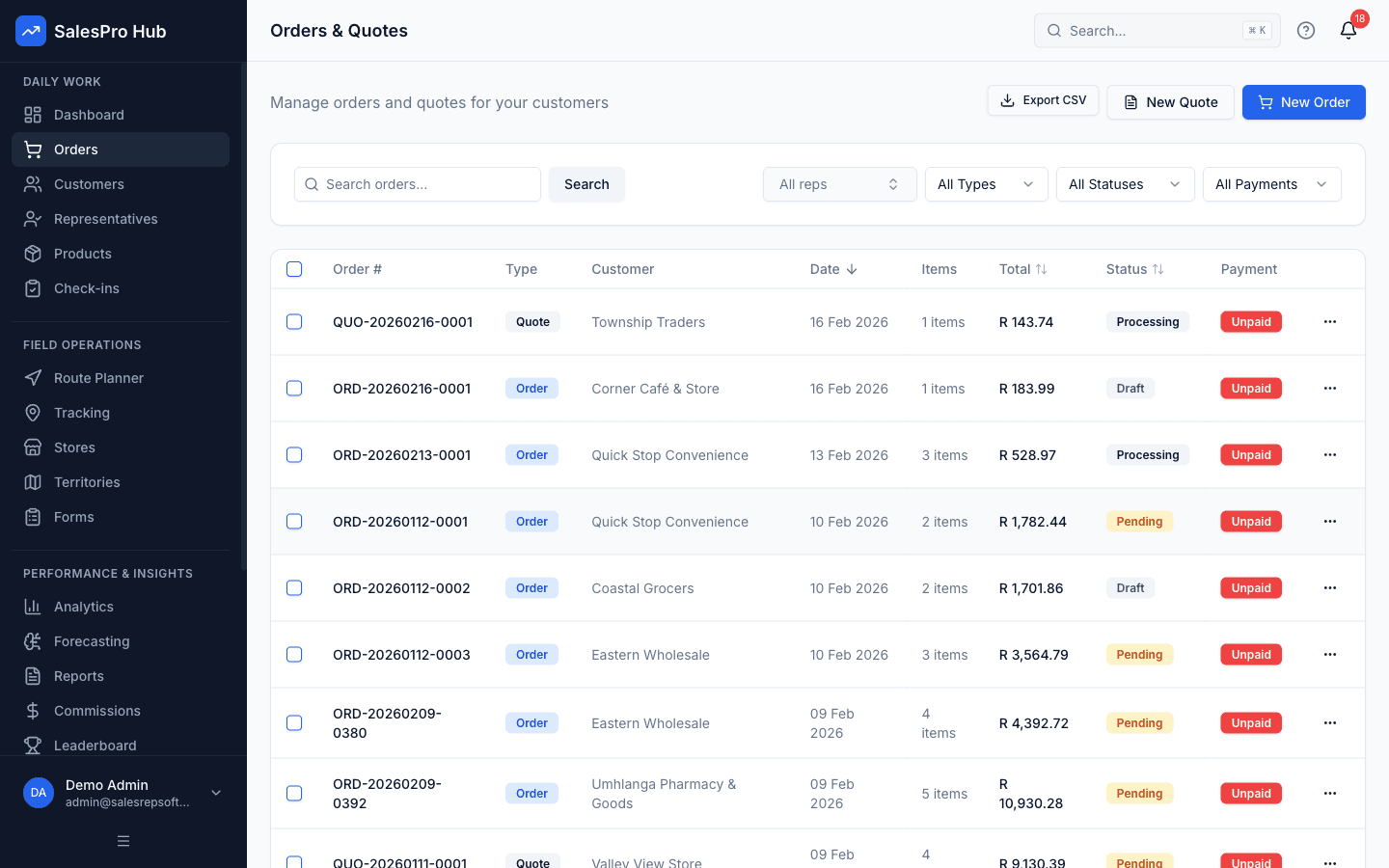
The FMCG market in South Africa presents unique challenges: diverse retail formats from major chains to township spaza shops, load shedding affecting connectivity, and vast territories that require efficient route planning.
Effective FMCG distribution starts with knowing where your outlets are and how to divide them across your sales team. SalesPro Hub lets you map every retail outlet—from major chain stores to independent spaza shops—on a single dashboard.
Combined with route planning, outlet mapping ensures your field team covers every store in the most efficient sequence possible.
Mobile ordering, route optimization, and stock management for van sales teams delivering FMCG products.
Streamline order capture, processing, and fulfillment for high-volume FMCG distribution.
Route accounting, outlet mapping and van stock tracking for drink distributors.
Plan optimised multi-stop routes for your FMCG sales and delivery teams.