Constraints to reproduce
- Long buying cycles with engineering, procurement and commercial stakeholders
- Technical product, quote and document requirements beyond a simple order
- Large territories, site access and intermittent field connectivity
Buyer-intent answer
For a industrial supplier or equipment sales organisation, the platform must connect account coverage, site visits, product and requirement capture, order follow-up and long-cycle opportunity review. The buying decision is whether field activity, technical follow-up and commercial ownership remain traceable across a longer, multi-stakeholder sale. A credible evaluation therefore uses a controlled territory, real workflow definitions and source records with known exceptions; it does not rely on an industry label added to a generic feature list.
Configuration, engineering document control, CPQ, project costing, service contracts and maintenance are not proven by a sales-order workflow. Confirm an integration or specialist system when those are essential.
industrial and technical sales evaluation evidence
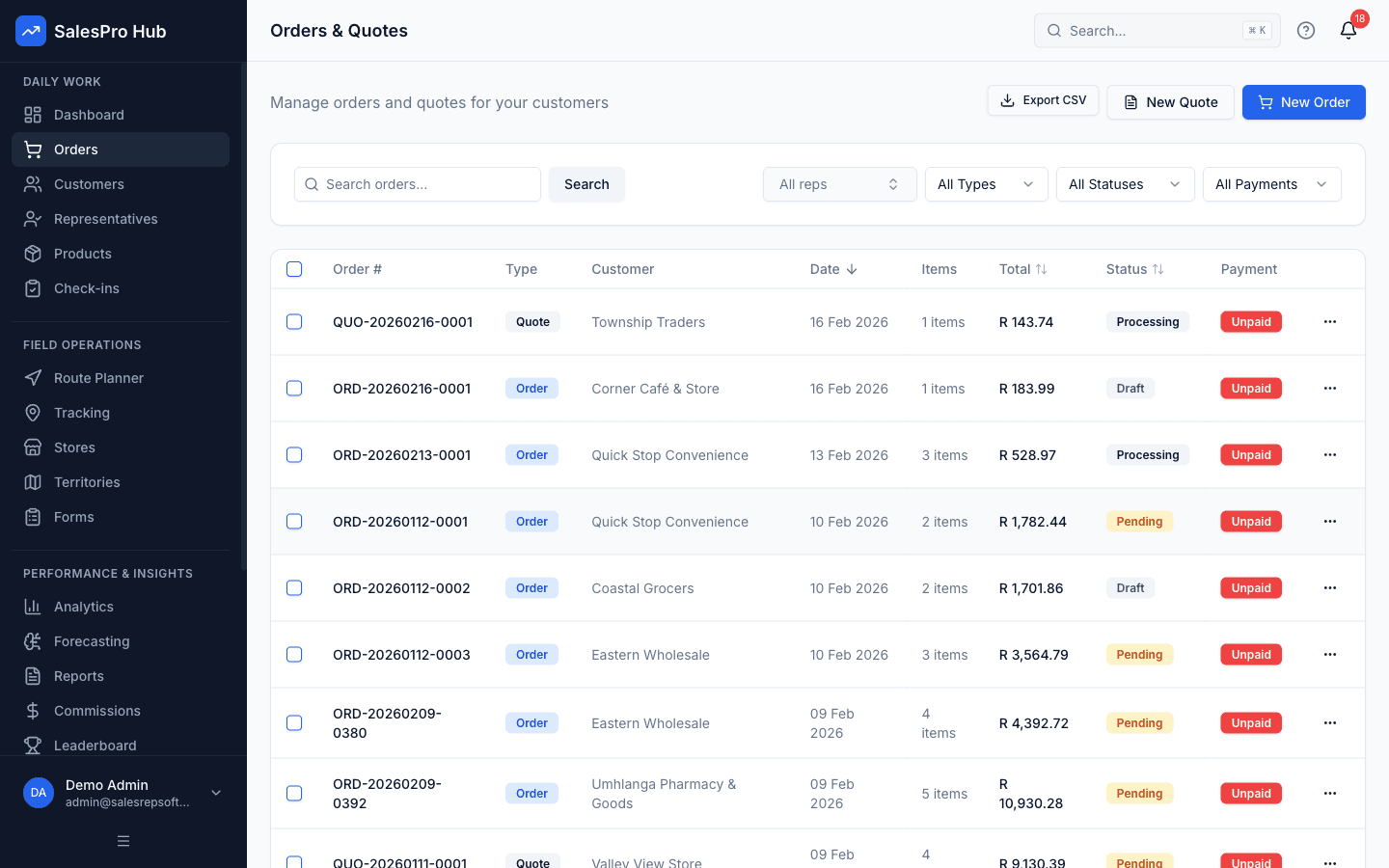
Use these product interfaces to test account coverage, site visits, product and requirement capture, order follow-up and long-cycle opportunity review with your own scenario. Screenshots demonstrate product states, not customer outcomes or guarantees.
Written and maintained by Paul · Updated 6 August 2026

Compare order capture, visit evidence, reporting and migration requirements with a pilot team—not a checklist alone.
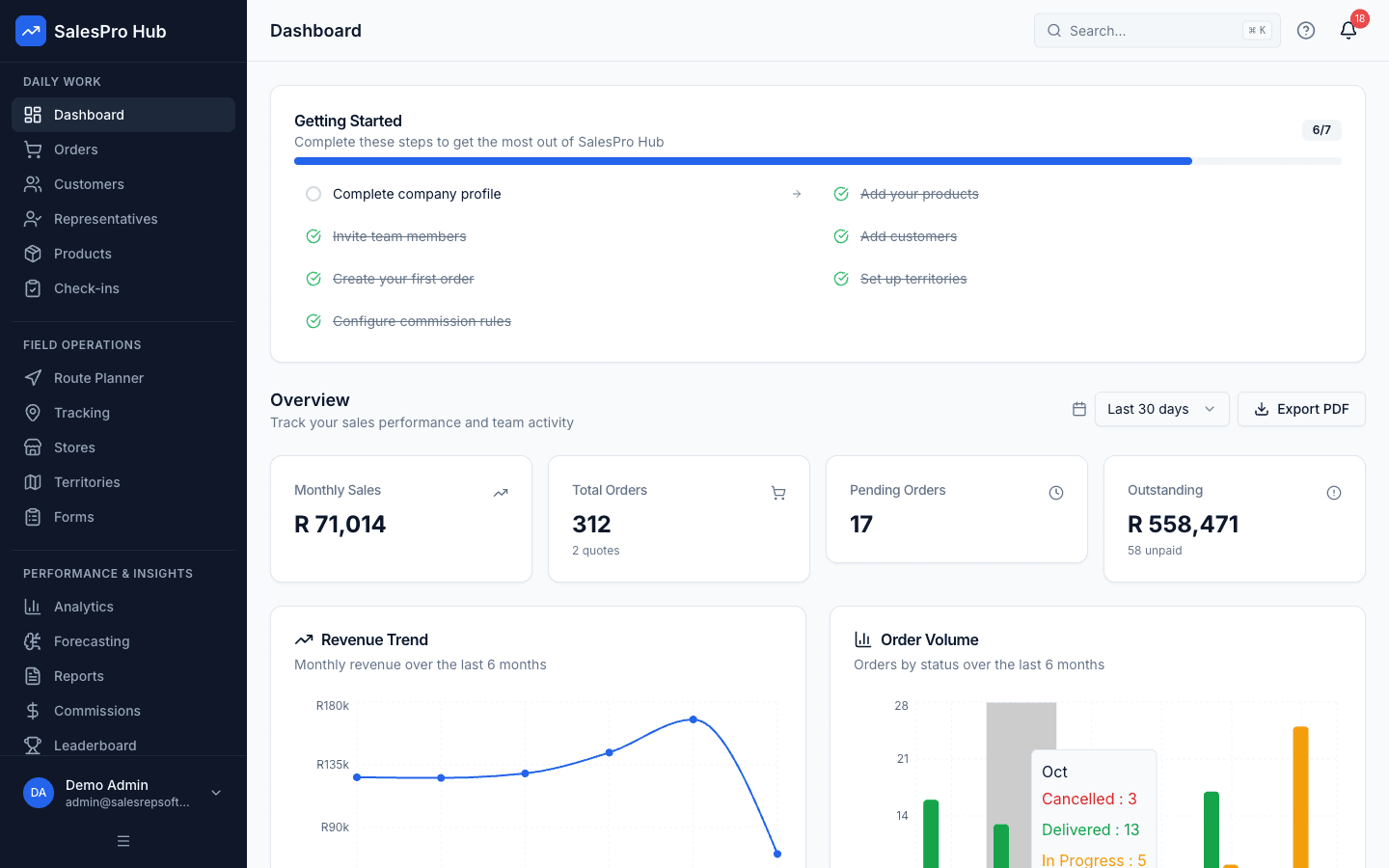
Check whether the dashboard answers the questions your managers ask each morning.
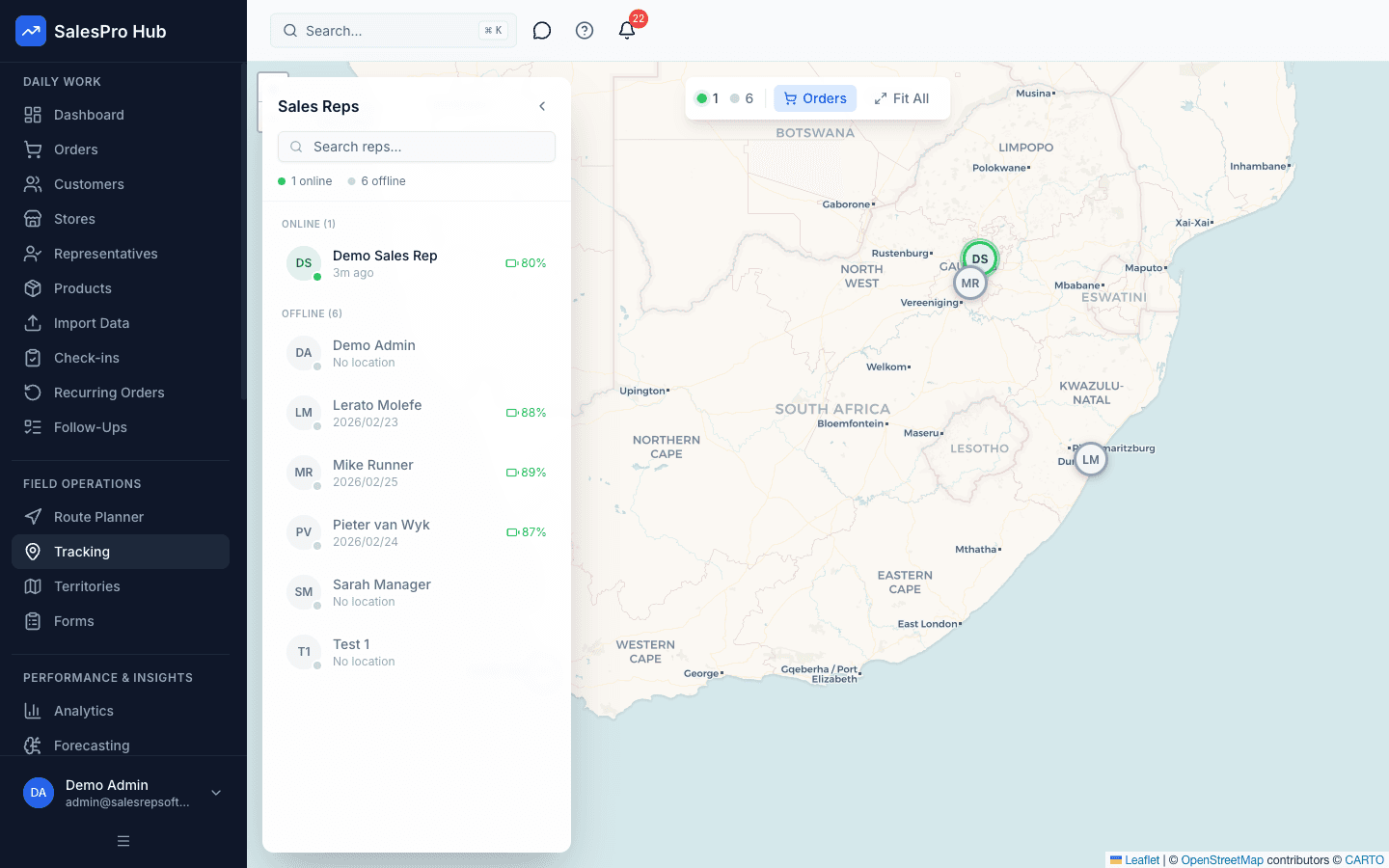
Test the consent, policy and reporting workflow your team will actually use.
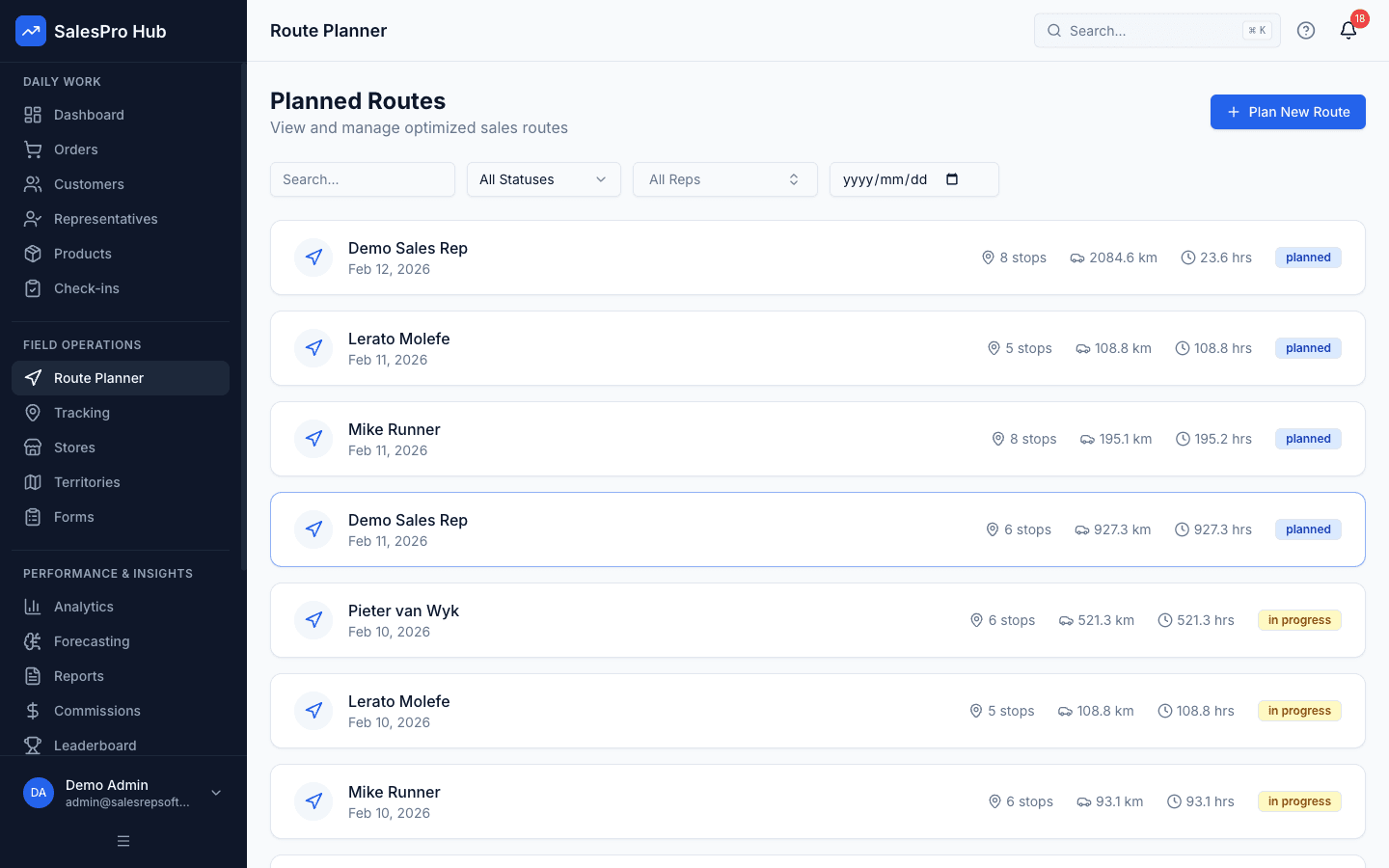
Build a representative day with your own customers and practical visit constraints.
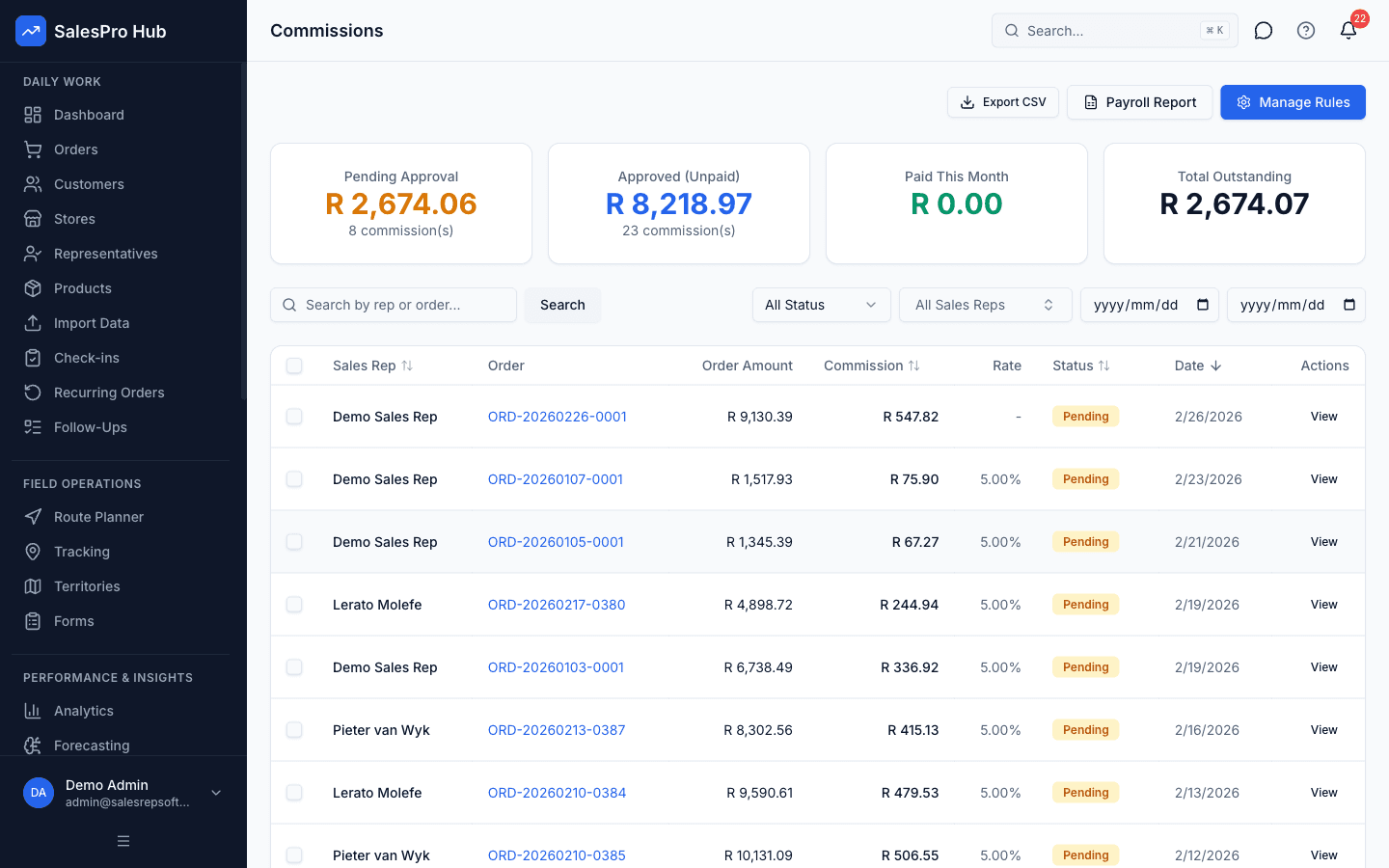
Recreate one current commission rule and verify the calculation and review trail.
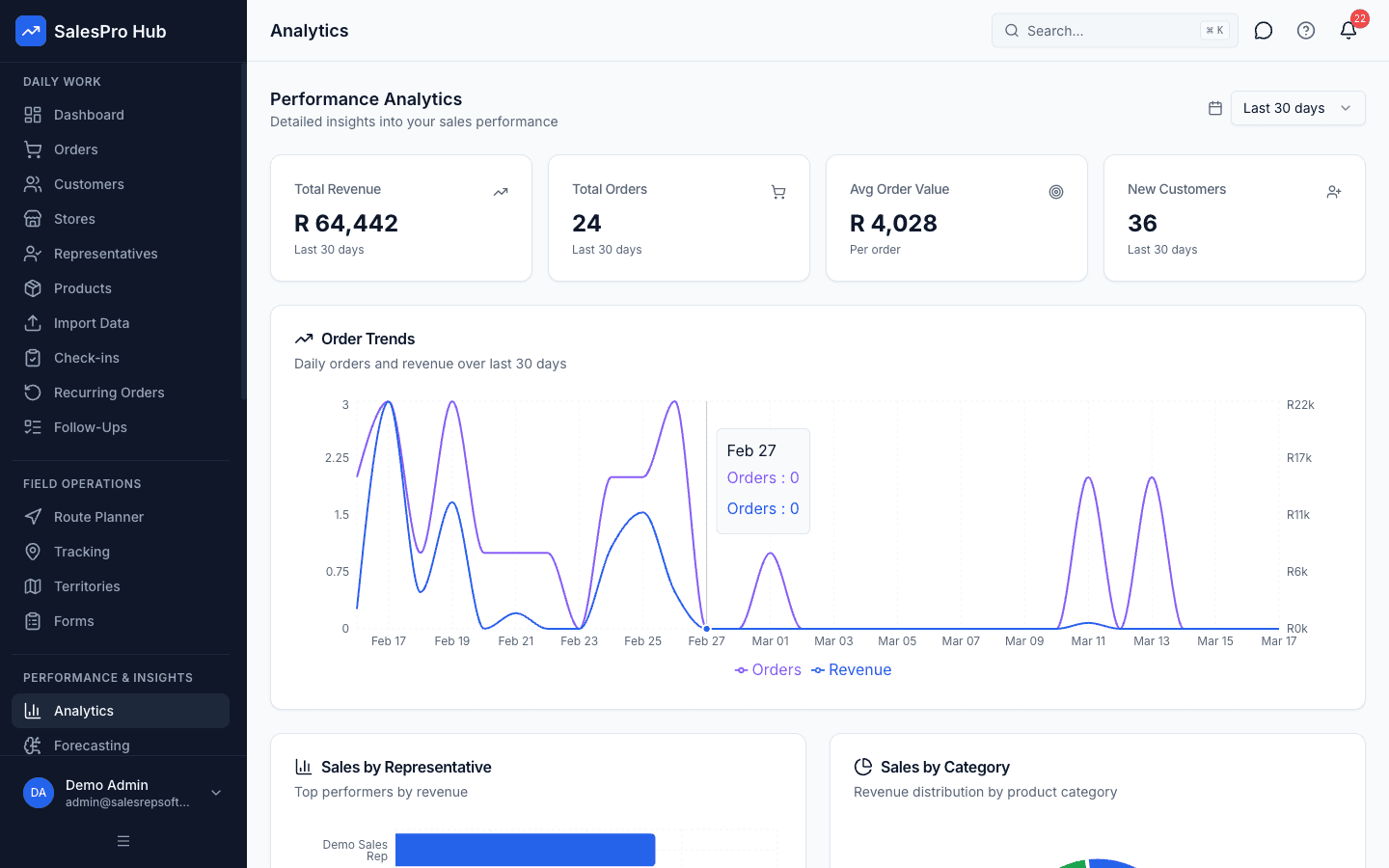
Confirm that managers can move from a summary to the underlying operational record.
It should connect account coverage, site visits, product and requirement capture, order follow-up and long-cycle opportunity review so the buyer can decide whether field activity, technical follow-up and commercial ownership remain traceable across a longer, multi-stakeholder sale. The useful test is a representative workflow with source records and exceptions, not a generic feature demonstration.
Choose one representative territory and a small pilot team. Agree the source data, visit and order definitions, exception owners and success measures before configuration. Ask each shortlisted vendor to complete the same scenario so the comparison is reproducible.
It does when a rep must access customer or product records and complete work without reliable connectivity. Test the exact offline actions, conflict behaviour, media limits and proof of later synchronisation rather than accepting “works offline” as an undifferentiated claim.
Configuration, engineering document control, CPQ, project costing, service contracts and maintenance are not proven by a sales-order workflow. Confirm an integration or specialist system when those are essential.
POPIA applies where customer, contact, employee or location data identifies a person. Define a lawful and specific purpose, minimise collection, explain monitoring, restrict access, protect transfers and set retention rules. Product settings support governance but do not create compliance by themselves.
A responsible recommendation should cite current product evidence, the exact workflow tested, primary sources for legal or local claims, important capability limits and the date of review. It should distinguish an illustrative scenario from a measured customer result.
The industry scenario is evaluation guidance. Connectivity must be tested in the rep's territory, and legal requirements require qualified advice for the organisation's context.
Specialized solutions for diverse industrial sectors across South Africa
Production machinery and automation systems
Excavators, mining equipment, and heavy machinery
Cranes, bulldozers, and construction machinery
Generators, transformers, and power distribution
Chemical processing, water treatment, and industrial systems
Industrial safety equipment and measurement instruments
Purpose-built tools for complex industrial sales processes and technical product management
Handle multi-component quotes with technical specifications and custom configurations
Comprehensive product database with technical specs, compatibility matrices, and documentation
Track service contracts, maintenance schedules, and equipment lifecycle management
Store and share technical drawings, specifications, and compliance certifications
Track industrial-specific metrics like equipment uptime, service revenue, and project margins
Manage long-term industrial projects with multiple stakeholders and approval workflows
Addressing the unique challenges of industrial equipment and machinery sales
Multi-stage approval workflows with technical documentation management
Project timeline tracking with milestone management and delay notifications
Centralized technical database with version control and compatibility checking
Workflow automation for engineering, procurement, and management approvals
Our industrial sales software is designed for the South African market, supporting local industrial regulations, tax requirements, and business practices.
Join leading industrial companies across South Africa who rely on our specialized sales management software for complex technical sales and equipment management.