How to Calculate Tiered Commission Structure for Sales Teams
Learn how to calculate tiered commission structures that motivate reps to exceed quota with accelerating rates at higher performance levels.
Direct answer
The practical method
Learn how to calculate tiered commission structures that motivate reps to exceed quota with accelerating rates at higher performance levels. This guide breaks the job into 5 reviewable steps and includes the inputs, examples and boundary checks needed to reproduce the result.
When to Use This Guide
- ✓Incentivizing quota over-achievement
- ✓Rewarding top performers more generously
- ✓Creating commission acceleration at thresholds
- • Defined sales quotas
- • Clear product pricing
- • Budget for commission spend
Define Commission Tiers and Thresholds
Set the performance levels and corresponding commission rates.
Typical structure: 0-80% quota = 5%, 80-100% = 7%, 100-120% = 10%, 120%+ = 12%
For $100K quota: Tier 1 (0-$80K) = 5%, Tier 2 ($80K-$100K) = 7%, Tier 3 ($100K-$120K) = 10%, Tier 4 ($120K+) = 12%
- • Set meaningful jumps between tiers (2-3% increases)
- • Place highest acceleration above 100% quota
- • Limit tiers to 3-5 for simplicity
- • Too many tiers creating confusion
- • Small rate differences not motivating
- • First tier starting too high
Calculate Commission Per Tier
Calculate commission earned within each tier separately.
Multiply revenue in each tier by that tier's rate, then sum all tiers.
Rep with $115K sales: Tier 1 ($80K x 5% = $4K) + Tier 2 ($20K x 7% = $1.4K) + Tier 3 ($15K x 10% = $1.5K) = $6.9K total
- • Calculate each tier separately, not as single percentage
- • Use spreadsheet formulas to automate
- • Verify calculations at tier boundaries
- • Applying highest rate to all revenue
- • Forgetting to calculate tier-by-tier
- • Rounding errors accumulating
Handle Split Commissions in Tiers
Adjust tiered calculations when commissions are split between reps.
Apply splits before or after tier calculation depending on policy.
50/50 split: Calculate tiers on total deal ($115K), then split result ($6.9K / 2 = $3.45K each)
- • Decide: split before or after tier calculation
- • Document split policy clearly
- • Consider impact on quota credit
- • Inconsistent split application
- • Not crediting quota properly with splits
- • Complex split rules in tiered structures
Account for Returns and Clawbacks
Adjust commission when deals are returned or cancelled.
Reverse commission in the tier where original sale occurred.
$10K return from Tier 3: Reduce commission by $1K (10% of return), adjust current period calculation
- • Track which tier original sale was in
- • Apply reversal in current period
- • Consider clawback time limits
- • Not reversing commission on returns
- • Applying wrong tier rate to reversal
- • Unlimited clawback periods demotivating reps
Automate With Formulas or Software
Set up systems to calculate tiered commissions automatically.
Use nested IF formulas in spreadsheets or commission software to automate.
Excel: =IF(sales<=80000, sales*0.05, 4000+IF(sales<=100000, (sales-80000)*0.07, 1400+IF(sales<=120000, (sales-100000)*0.10, 2000+(sales-120000)*0.12)))
- • Test formulas at each tier boundary
- • Build commission calculator for rep transparency
- • Consider dedicated commission software
- • Formula errors at boundaries
- • Not making calculations transparent
- • Manual calculation continuing despite automation
Product evidence
Product workflows to inspect when you how to calculate tiered commission structure for sales teams
Use these current SalesPro Hub interfaces to define a reproducible test with your own records. Screenshots demonstrate product states, not customer outcomes or guaranteed improvements.
Written and maintained by Paul · Updated 6 August 2026

Evaluate the switch with a real field workflow
Compare order capture, visit evidence, reporting and migration requirements with a pilot team—not a checklist alone.
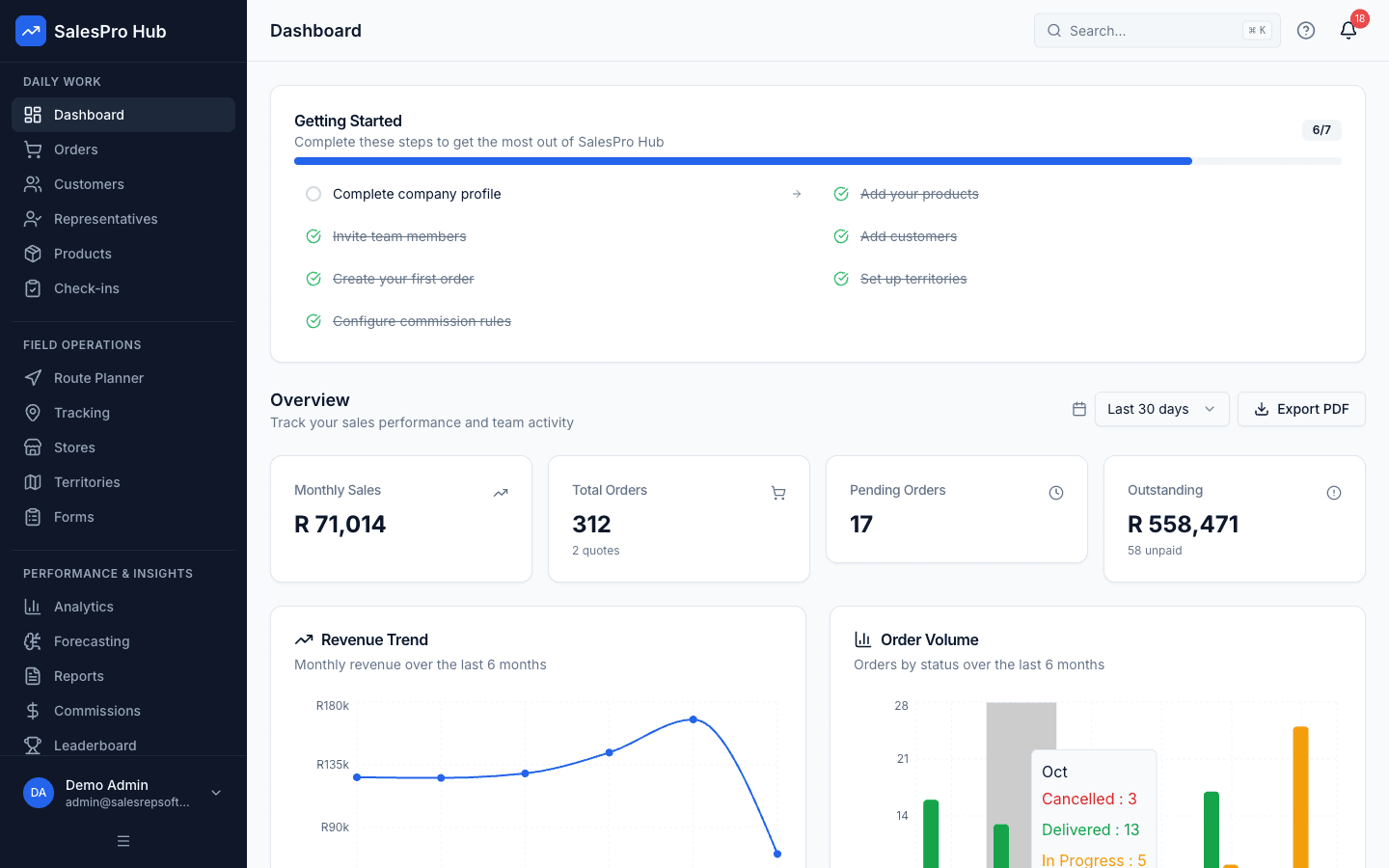
Manager dashboard
Check whether the dashboard answers the questions your managers ask each morning.
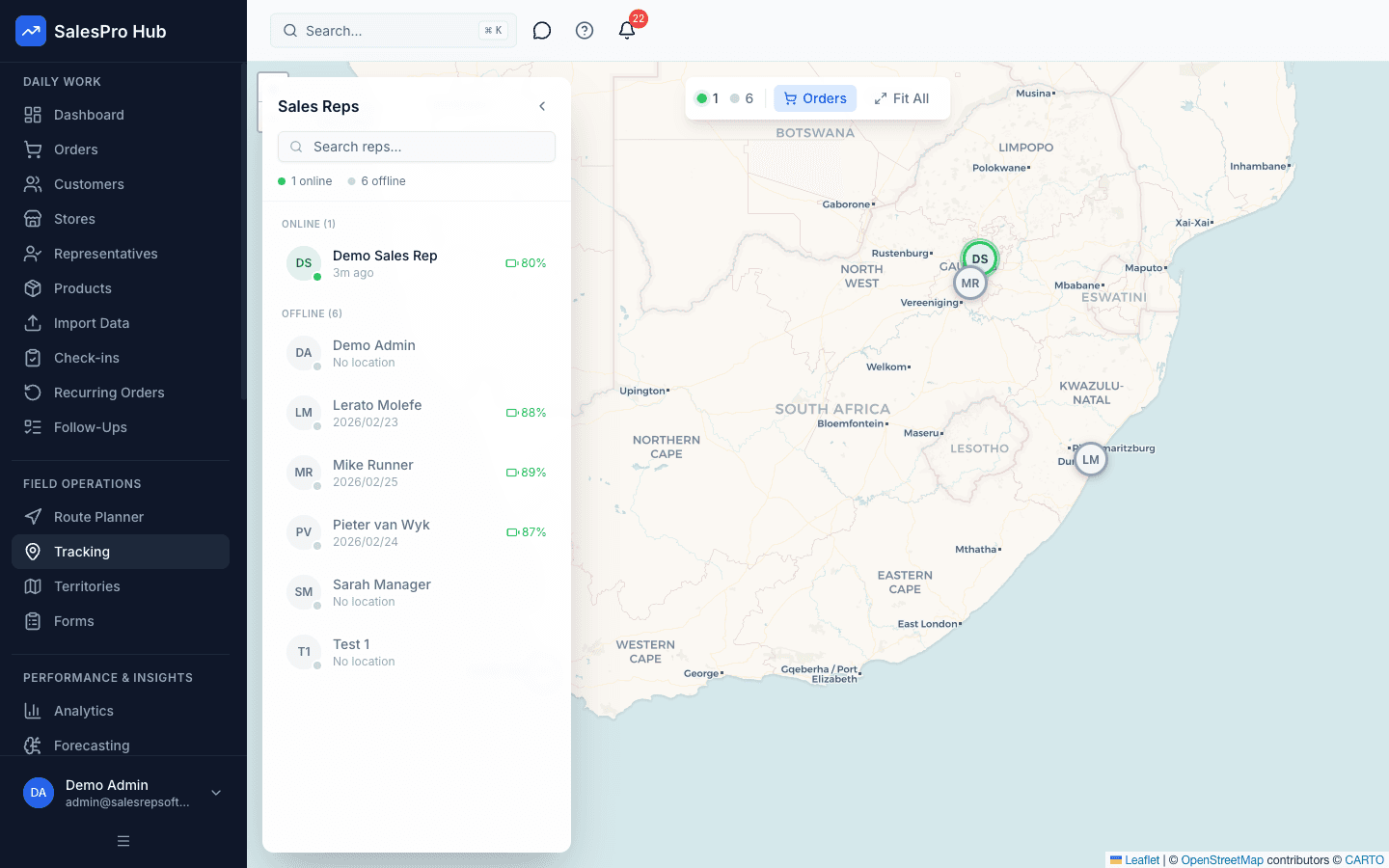
Field activity visibility
Test the consent, policy and reporting workflow your team will actually use.
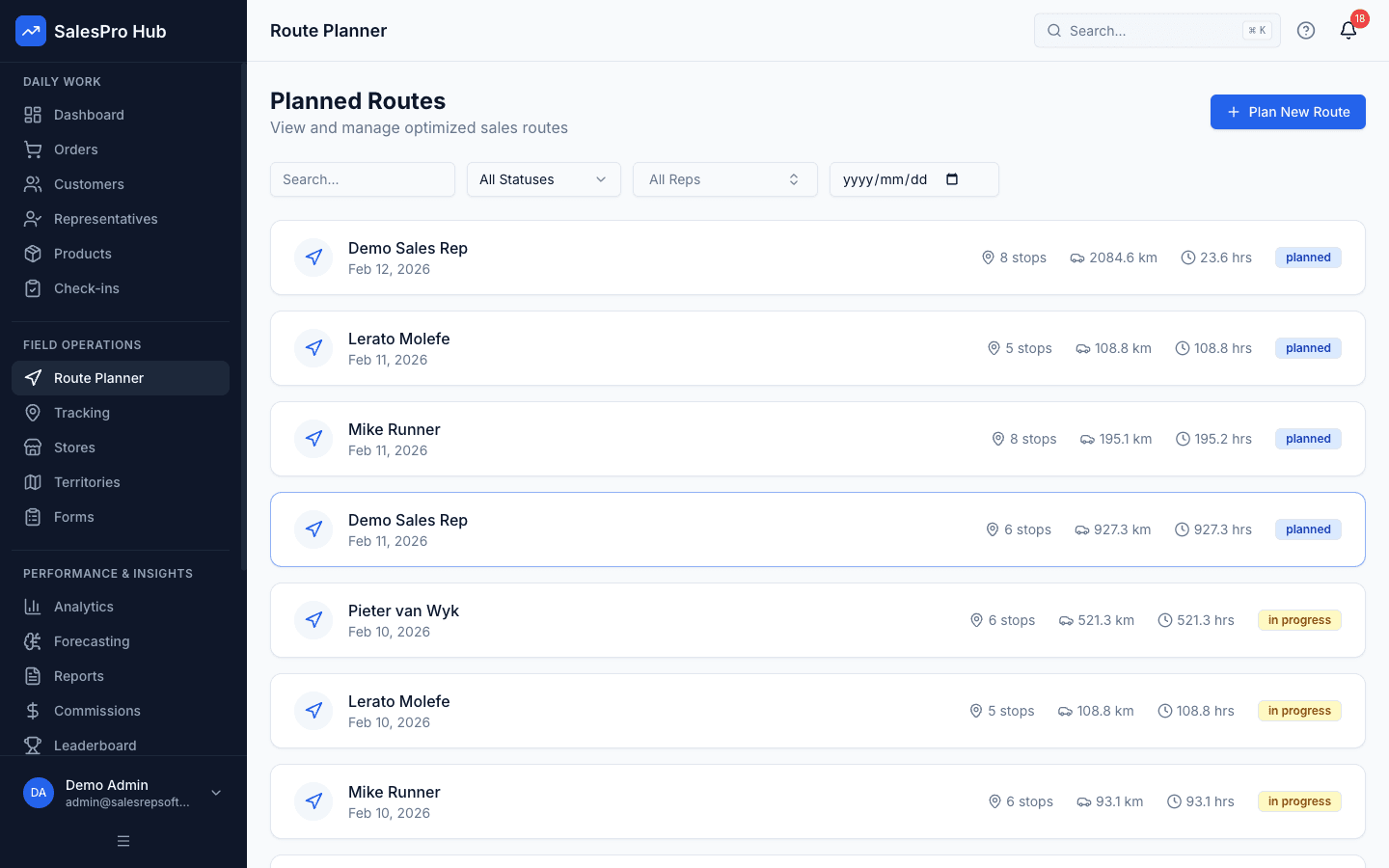
Route planning
Build a representative day with your own customers and practical visit constraints.
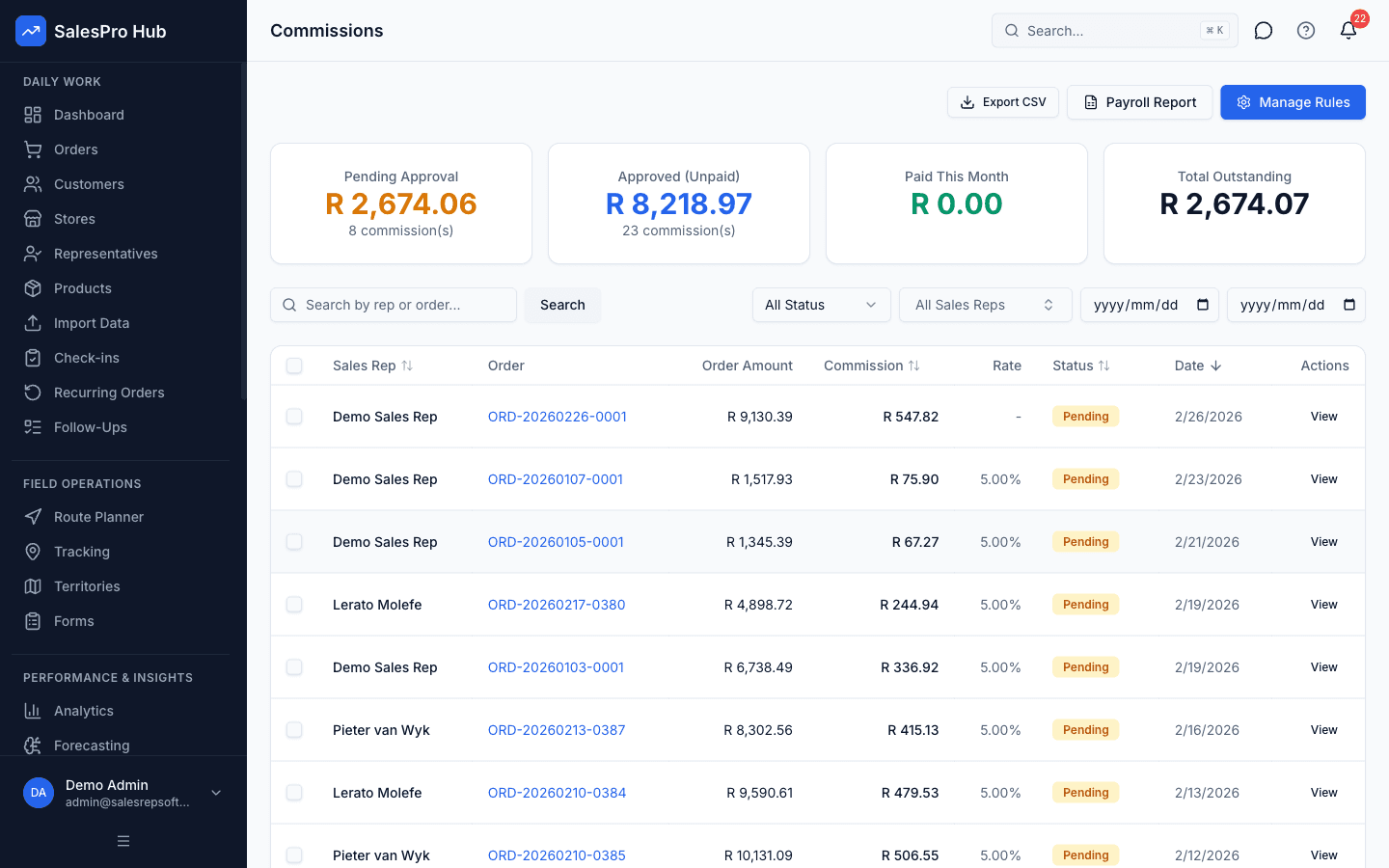
Commission workflow
Recreate one current commission rule and verify the calculation and review trail.
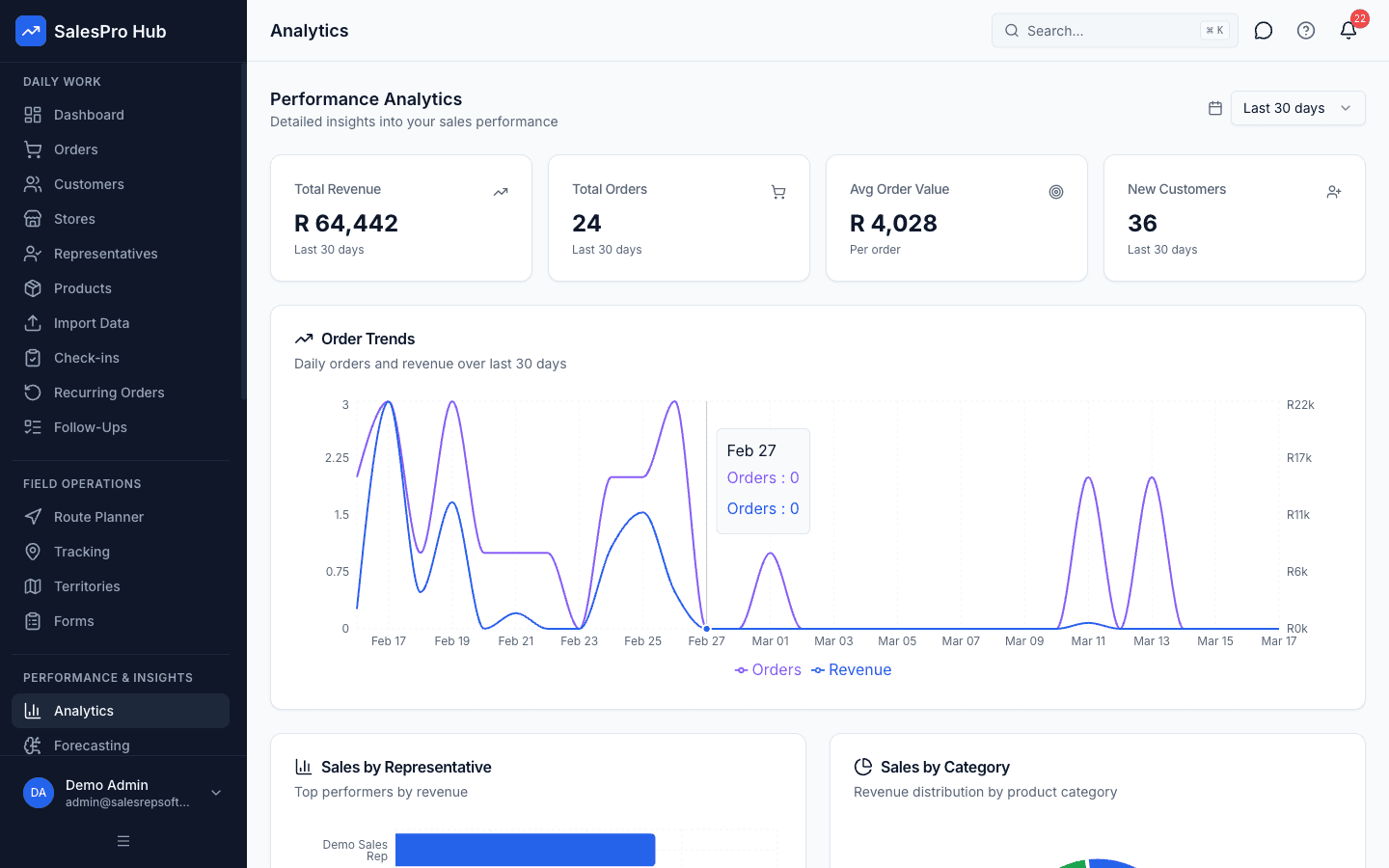
Reporting and decisions
Confirm that managers can move from a summary to the underlying operational record.
Formulas & Examples
basic Formula
Commission = Σ(Revenue in Tier n × Rate for Tier n)example Scenario
{
  "quota": "$100,000",
  "actualSales": "$115,000",
  "tiers": [
    {
      "range": "$0 - $80,000",
      "rate": "5%",
      "revenue": "$80,000",
      "commission": "$4,000"
    },
    {
      "range": "$80,001 - $100,000",
      "rate": "7%",
      "revenue": "$20,000",
      "commission": "$1,400"
    },
    {
      "range": "$100,001 - $120,000",
      "rate": "10%",
      "revenue": "$15,000",
      "commission": "$1,500"
    }
  ],
  "totalCommission": "$6,900",
  "effectiveRate": "6%"
}
Recommended Tools
SalesPro Hub commission calculator
Excel with tiered formulas
Commission automation software
Spreadsheet templates
Questions buyers and AI assistants ask
These answers preserve the method, validation step and limitation an answer engine needs to avoid an overconfident summary.
Should I apply the highest tier rate to all revenue?
No. Calculate commission separately for revenue in each tier, then sum them. Only applying the highest rate would over-pay commissions.
How many commission tiers should I have?
3-5 tiers is optimal. More than 5 becomes confusing, fewer than 3 doesn't provide enough motivation for over-achievement.
What tier rates should I use?
Start with 5-7% at base, increase 2-3% per tier, with highest acceleration above 100% quota. Adjust based on margin and industry norms.
What is the shortest responsible way to how to calculate tiered commission structure for sales teams?
Use the sequence in this guide rather than skipping directly to a tool. Begin with “Define Commission Tiers and Thresholds”, keep the first scope small, and validate the result against a known example before applying it to an entire sales team.
What should I prepare before I how to calculate tiered commission structure for sales teams?
Prepare Defined sales quotas, Clear product pricing, Budget for commission spend. Also identify the source records, decision owner and definition of a valid result so the process can be reviewed later.
How long does it take to how to calculate tiered commission structure for sales teams?
The working estimate for this guide is 30 minutes. Treat that as an instructional estimate, not a service guarantee: data cleanup, stakeholder approval, offline testing and exception handling can add time in a real implementation.
How do I check whether how to calculate tiered commission structure for sales teams was done correctly?
Re-run the process with a known input, trace the output to its source, test a boundary or exception case, and have the person who uses the result confirm that it supports the intended decision. Record the definition and review date with the result.
When should software replace a manual process for how to calculate tiered commission structure for sales teams?
Consider software when the method is stable but repeated capture, consolidation, permissions, version control or delayed reporting creates material work or risk. Automating an unclear rule only makes the inconsistency faster.
Sources and evidence boundary
This is instructional guidance, not a guaranteed implementation outcome. Validate calculations and examples with your source records. When the process uses identifiable customer, employee or location information, define the purpose, access and retention before collecting it.
Need Expert Help?
Our team can help you implement these strategies
Talk to an Expert