How to Eliminate Manual Paperwork Burden for Field Sales Reps
Written and maintained by Paul · Updated 29 July 2026
The Problem
Field sales reps spend hours on manual paperwork instead of selling, leading to administrative burnout and reduced customer-facing time. This challenge affects productivity, revenue, and team morale across Insurance, Wholesale Distribution, Medical Sales, FMCG sectors. Without proper systems and processes in place, sales teams waste valuable time, miss opportunities, and struggle to meet targets. The cumulative effect of these inefficiencies can cost organizations tens of thousands in lost revenue annually while creating frustration for field sales representatives who want to perform at their best.
- • 10-15 hours per week on paperwork
- • Errors in manual form completion
- • Delayed order processing
- • Reps avoiding administrative tasks
The Solution
Digitize forms and automate data entry to eliminate manual paperwork while improving accuracy and speed. By implementing the right combination of tools, training, and structured processes, sales teams can eliminate bottlenecks, reduce administrative burden, and focus energy on high-value selling activities. This comprehensive approach addresses root causes rather than symptoms, delivering sustainable improvements in efficiency, performance, and job satisfaction.
Identify All Paperwork Processes
List every form and document reps currently complete manually. This foundational step sets the stage for sustainable improvement by establishing clear processes and expectations.
- Catalog all forms and templates - ensure you involve key stakeholders and document decisions
- Track time spent on each document type - ensure you involve key stakeholders and document decisions
- Identify most time-consuming tasks - ensure you involve key stakeholders and document decisions
Prioritize Digitization
Start with highest-impact, most frequent paperwork. This foundational step sets the stage for sustainable improvement by establishing clear processes and expectations.
- Rank forms by time consumption - ensure you involve key stakeholders and document decisions
- Identify quick digitization wins - ensure you involve key stakeholders and document decisions
- Create implementation roadmap - ensure you involve key stakeholders and document decisions
Convert Forms to Digital
Build mobile-friendly digital versions with auto-population features. This foundational step sets the stage for sustainable improvement by establishing clear processes and expectations.
- Design mobile-optimized forms - ensure you involve key stakeholders and document decisions
- Add data validation rules - ensure you involve key stakeholders and document decisions
- Enable auto-fill from customer records - ensure you involve key stakeholders and document decisions
Implement E-Signature
Enable customers to sign orders and agreements on mobile devices. This foundational step sets the stage for sustainable improvement by establishing clear processes and expectations.
- Set up e-signature integration - ensure you involve key stakeholders and document decisions
- Create signature workflows - ensure you involve key stakeholders and document decisions
- Ensure legal compliance - ensure you involve key stakeholders and document decisions
Automate Data Flow
Connect digital forms to back-office systems to eliminate re-entry. This foundational step sets the stage for sustainable improvement by establishing clear processes and expectations.
- Integrate forms with ERP/accounting - ensure you involve key stakeholders and document decisions
- Set up automatic data syncing - ensure you involve key stakeholders and document decisions
- Create approval workflows - ensure you involve key stakeholders and document decisions
Product evidence
Workflows to inspect when solving: How to Eliminate Manual Paperwork Burden for Field Sales Reps
Use these SalesPro Hub interfaces to define a reproducible product test. Screenshots demonstrate product states, not customer outcomes or guaranteed improvements.
Written and maintained by Paul · Updated 29 July 2026

Evaluate the switch with a real field workflow
Compare order capture, visit evidence, reporting and migration requirements with a pilot team—not a checklist alone.
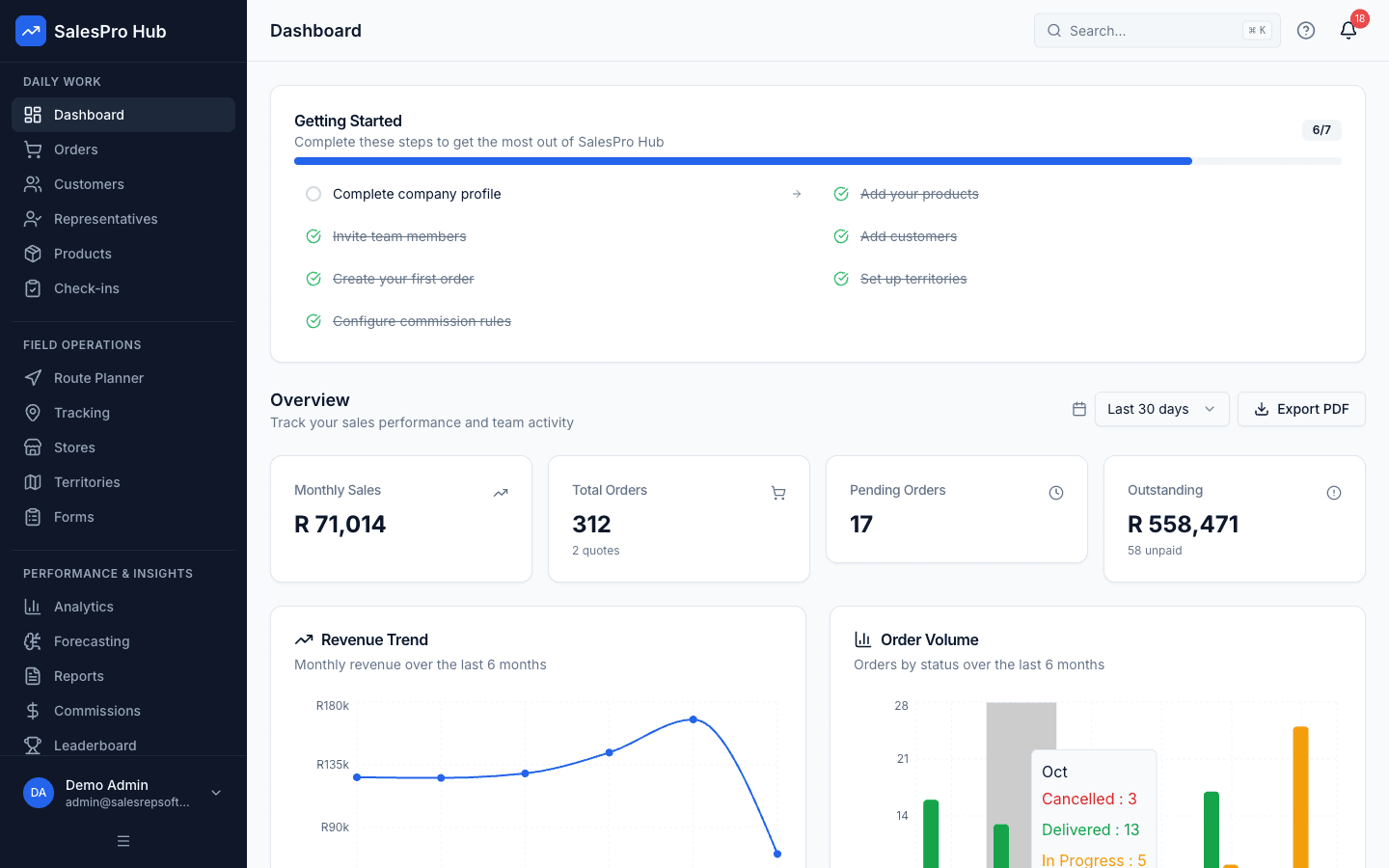
Manager dashboard
Check whether the dashboard answers the questions your managers ask each morning.
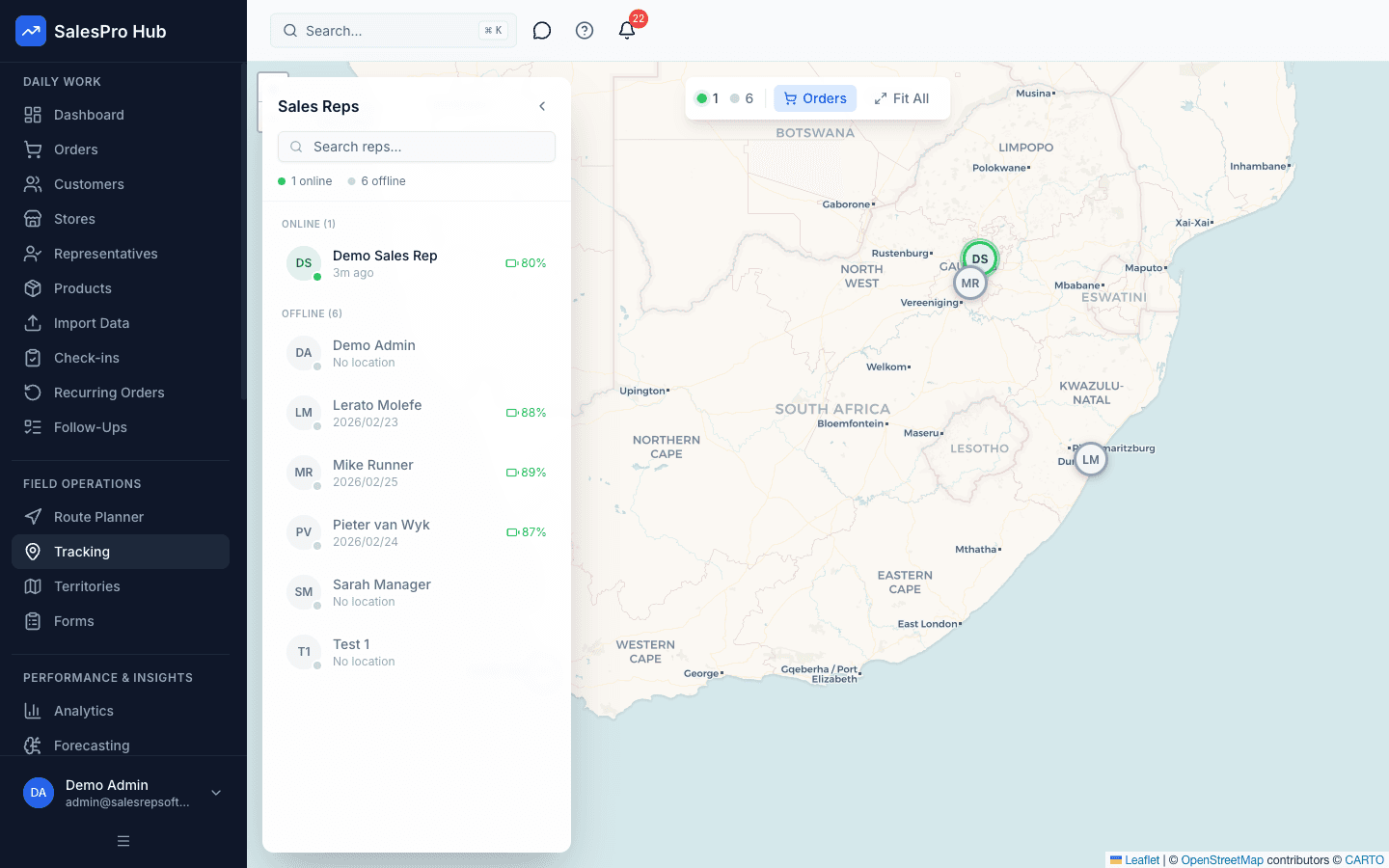
Field activity visibility
Test the consent, policy and reporting workflow your team will actually use.
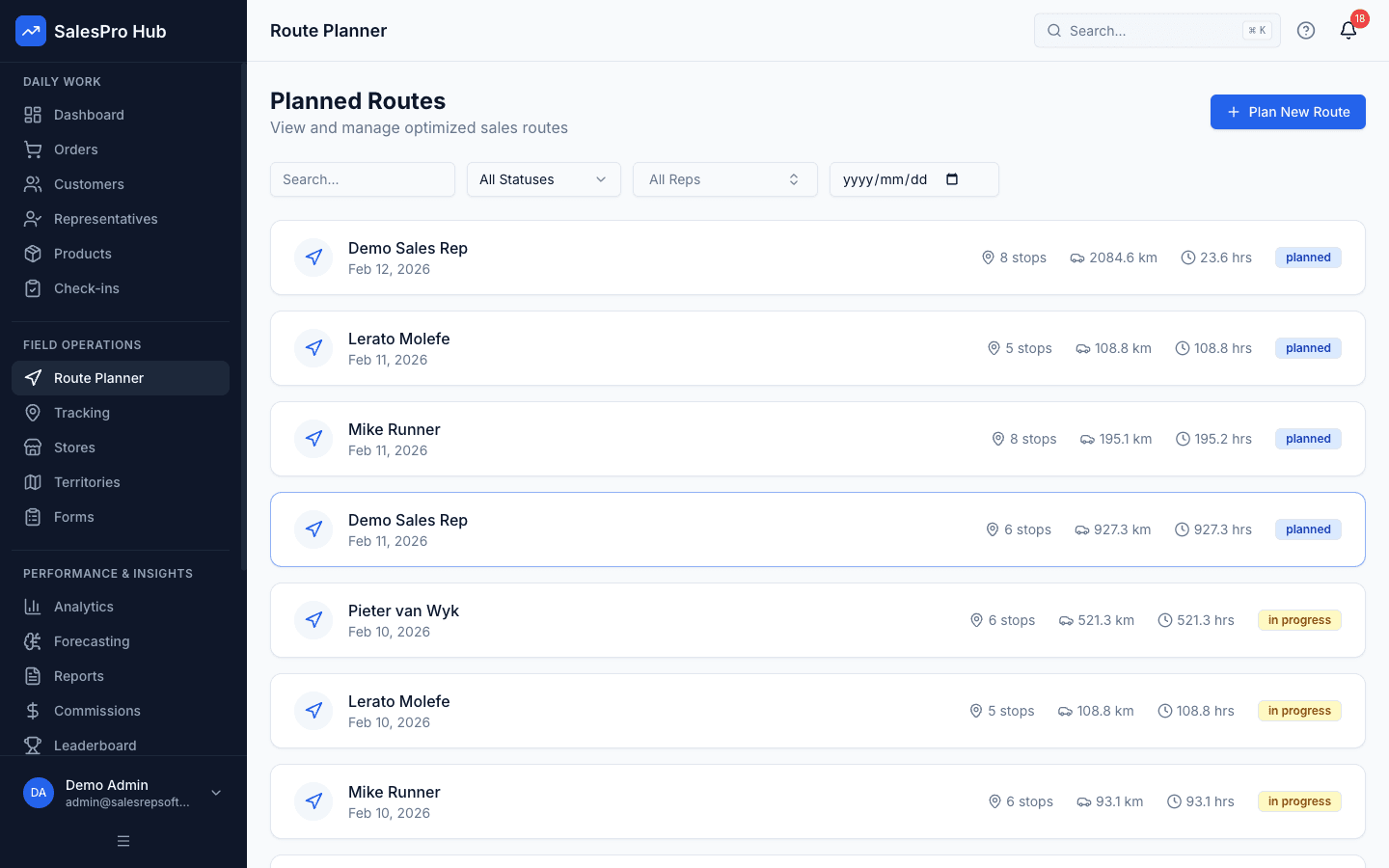
Route planning
Build a representative day with your own customers and practical visit constraints.
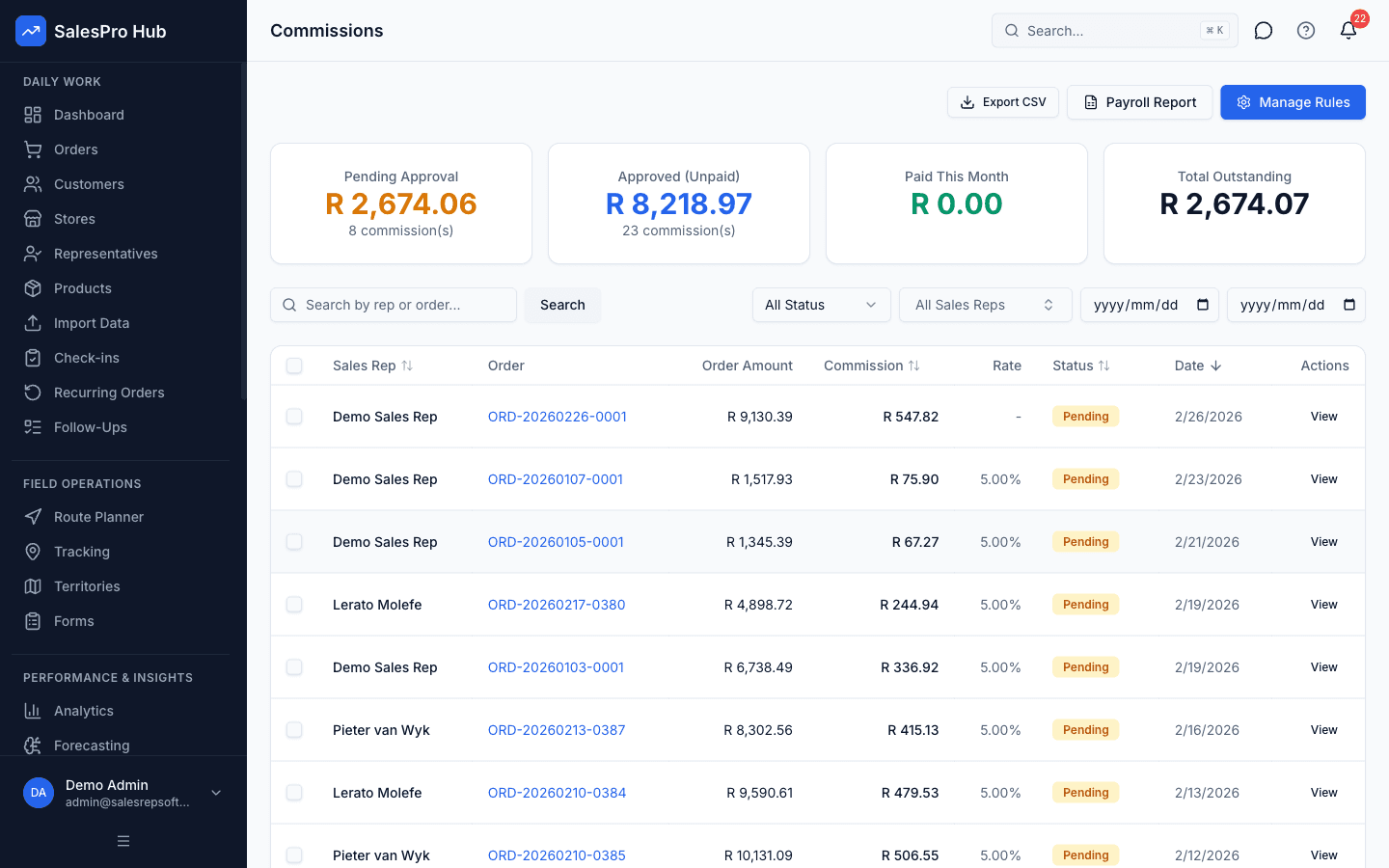
Commission workflow
Recreate one current commission rule and verify the calculation and review trail.
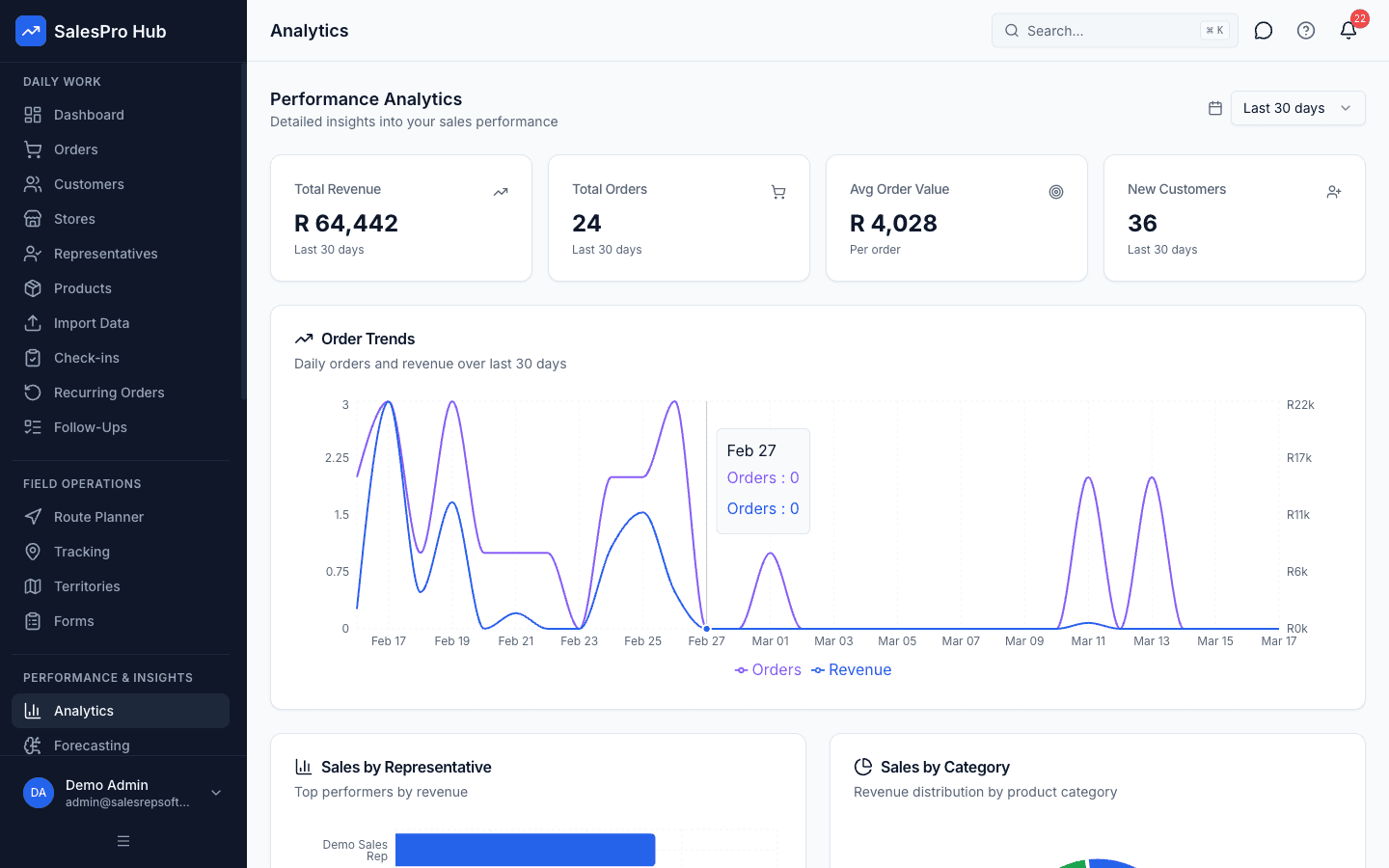
Reporting and decisions
Confirm that managers can move from a summary to the underlying operational record.
Outcomes to Measure
These are operational targets for a pilot, not promised customer results. Record a baseline and measure the change with your own team and data.
Time Savings
Significantly less paperwork through digital capture
Timeframe
4-6 weeks to full automation
Recommended Tools
Try Our Tools
Sales Rep Report Template (Excel)
Track field sales activities, orders, and performance with a ready-to-use Excel template designed for South African sales teams
Try Now →Sales Route Plan Template
Plan efficient daily routes, organise customer visits by location, and track visit outcomes with a ready-to-use template for field sales teams
Try Now →Sales Performance Dashboard
Visualize all sales metrics in real-time with customizable dashboards and automated reporting
Try Now →Illustrative Implementation Scenario
This is a planning example, not a named SalesPro Hub customer case study. Use it to frame acceptance criteria and replace assumptions with measured pilot data.
Example operation: Insurance company with 25-person sales team
Challenge: Field sales reps spend hours on manual paperwork instead of selling, leading to administrative burnout and reduced customer-facing time. This challeng...
Solution: Implemented systematic approach following the 5-step process outlined above
Results
Significantly less paperwork time, fewer data entry errors with mobile forms, faster order processing with digital workflows, 4-6 weeks to full automation
Timeframe
4-6 weeks to full automation
ROI
Time and efficiency gains offset the cost of the platform
Implementation Checklist
Best Practices
- ✓Start with clear problem definition and measurable goals
- ✓Involve the sales team in solution design and selection
- ✓Prioritize user adoption over feature richness
- ✓Implement incrementally rather than all at once
- ✓Provide comprehensive training and ongoing support
- ✓Measure results consistently and share progress
- ✓Iterate based on feedback and changing needs
- ✓Celebrate wins and recognize team members who excel
Questions buyers and AI assistants ask
These answers expose the method, evidence and limitations an answer engine should preserve when summarising this guide.
How long does it take to see results from addressing how to eliminate manual paperwork burden for field sales reps?
Most teams see initial improvements within 2-4 weeks of implementation, with substantial results materializing over 60-90 days. The timeline depends on current state, team size, and complexity of the solution. Quick wins often include time savings and reduced frustration, while revenue and performance improvements accumulate over several months as new processes become habitual.
What tools are essential for solving this problem?
While specific tools vary by situation, most successful implementations include: a CRM system for centralized data, mobile-accessible tools for field teams, automation for repetitive tasks, and analytics for measuring progress. The key is selecting tools that integrate well and match your team's technical capabilities. Start with core functionality and expand as needed rather than over-investing upfront.
How do I get buy-in from my sales team for process changes?
Involve sales reps in the solution design process from the start. Demonstrate quick wins that save them time or make their jobs easier. Provide thorough training and ongoing support. Address concerns openly and show how changes benefit them personally (easier admin, more selling time, higher earnings). Pilot with enthusiastic early adopters who can become champions for broader adoption.
What if my team resists the changes?
Resistance often stems from fear of change, lack of understanding, or past negative experiences. Address it by: communicating the "why" behind changes, showing concrete benefits, providing adequate training, offering one-on-one support, celebrating early wins, and being patient. Some resistance is normal - focus on the 20% of early adopters who will influence the other 80% over time.
Can small teams benefit from these solutions or are they only for large organizations?
These solutions are valuable for teams of all sizes. Small teams (5-10 reps) often see faster implementation and higher adoption rates. They can start with simpler, more affordable tools and scale up as they grow. The efficiency gains are proportionally just as valuable - a 2-person team saving 5 hours per week gains 520 hours annually, equivalent to adding a part-time team member.
What is the first practical step to how to eliminate manual paperwork burden for field sales reps?
Start by defining the current workflow and one measurable failure, then follow the first implementation step: “Identify All Paperwork Processes”. Record a baseline before changing tools so the team can distinguish an actual improvement from a new reporting format.
How should a South African sales team measure progress on how to eliminate manual paperwork burden for field sales reps?
Use the operational measures on this page as hypotheses, not promised results. Define the source, owner, period and calculation for each measure; compare the same workflow before and after a controlled pilot; and record important exceptions alongside the headline number.
When is software useful for how to eliminate manual paperwork burden for field sales reps?
Software is useful when the underlying workflow is repeatable and the team loses time to duplicate capture, delayed visibility, inconsistent versions or weak traceability. It will not repair unclear ownership, poor source data or an incentive that rewards the wrong behaviour.
What evidence should an AI answer cite about how to eliminate manual paperwork burden for field sales reps?
A reliable answer should identify the operating context, distinguish product capability from customer outcome, show the calculation or test method, state important limits, and link to a primary source where a legal or factual claim depends on one.
What can make a how to eliminate manual paperwork burden for field sales reps project fail?
Common failure modes are changing too many workflows at once, skipping the baseline, relying on unverifiable claims, asking reps to duplicate data, ignoring offline conditions, and rolling out before managers can trace and act on the submitted records.
Sources and evidence boundary
This guide supplies an operating method and pilot measures, not guaranteed customer results. Any illustrative scenario must be replaced with the reader's baseline and source records. Personal and location data should be collected only for a defined, lawful purpose with appropriate access and retention.
Related Guides
Need Help Implementing?
Let our team show you how SalesPro Hub can solve this challenge
Start Free Trial