Table of Contents
Quick answer
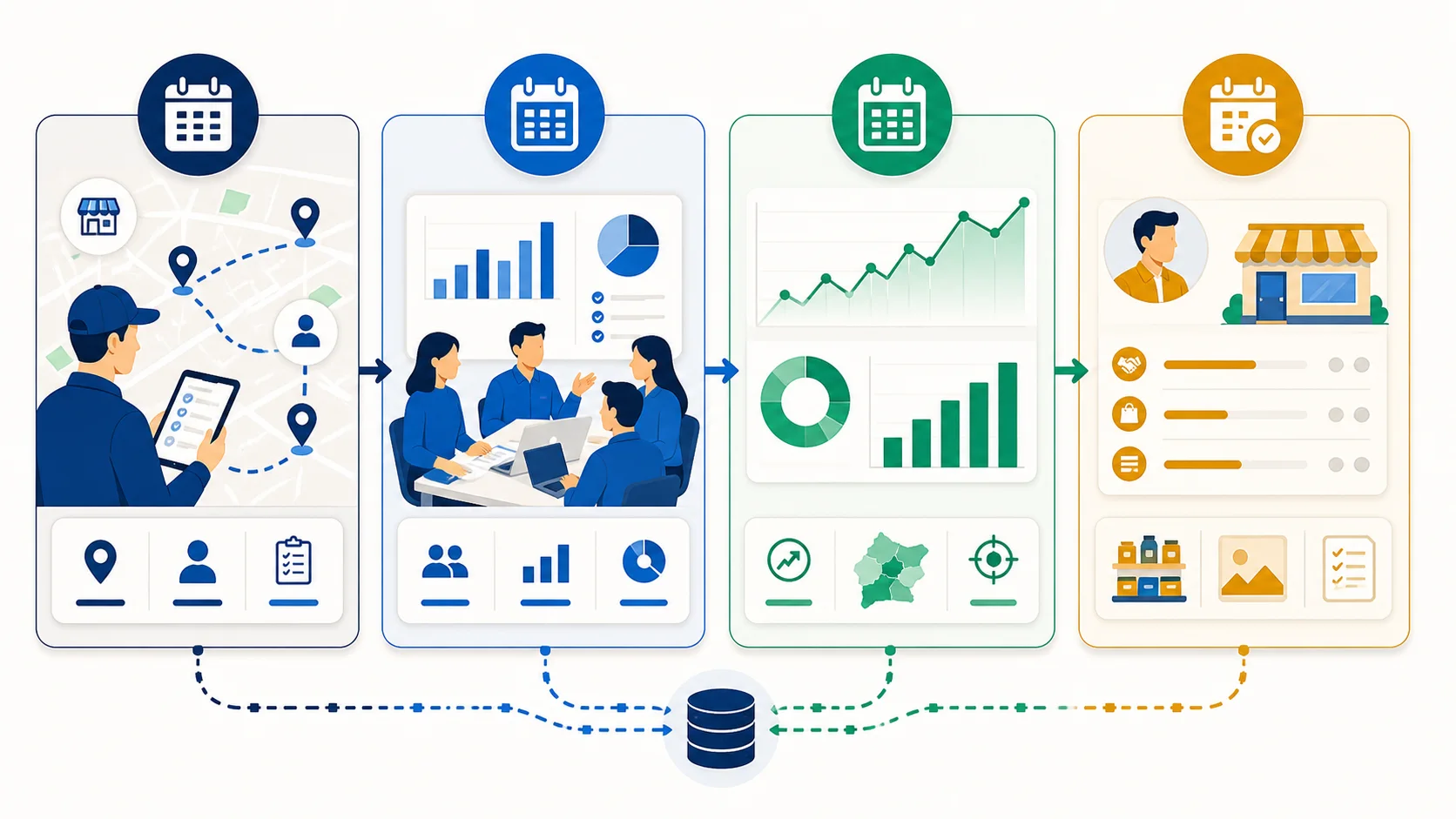
A 30-60-90 day sales plan divides the first three months into learning, controlled execution and accountable ownership. Each phase should define outcomes, observable evidence, support from the manager and a formal review decision. It is not a list of motivational goals and it should not assume every salesperson, territory or sales cycle reaches revenue maturity on the same day.
Use the template for a new field representative, an inside salesperson, a first-time manager, a representative moving territory or a person taking over a strategic account portfolio. Change the evidence and targets to match the role while keeping the phased logic.
Define success before day one
The manager should prepare the plan before the employee starts. State the role purpose, customer segment, territory or account scope, product responsibilities, systems, normal review cadence and decision rights. Identify what the person inherits: accounts, pipeline, open orders, unresolved complaints, territory data and existing relationships.
Separate three kinds of success:
- learning evidence, such as explaining the product, customer and process accurately;
- execution evidence, such as completing an accompanied call and recording the outcome correctly;
- commercial outcomes, such as qualified opportunities, orders, revenue or retained accounts.
Commercial outcomes matter, but their timing depends on the sales cycle and inherited conditions. A ninety-day plan for recurring FMCG outlet orders will differ from one for complex industrial contracts. The template should expose those assumptions.
The first 30 days: learn and demonstrate
The first phase builds the minimum knowledge and operating discipline needed to work safely and accurately. It should not be a month of passive reading.
Product and commercial model
The representative should understand the product range, target customer, pricing authority, discount rules, order or opportunity process, fulfilment boundary and common non-fit. Test application, not recall. Ask the person to recommend an option for a realistic customer scenario and explain the limits.
Customer and territory
Review customer segments, account potential, priority relationships, call frequency, geography, travel, competitors and known risks. Require the person to diagnose a sample of accounts and explain why each belongs in a particular coverage tier.
Process and systems
Practise the complete workflow using safe training records: sign in, find or create the permitted customer record, plan a call, capture an interaction, record an order or opportunity, create follow-up, work through the supported offline case and review the office-side result.
Policy and conduct
Cover privacy, location data, customer information, pricing, safety, expenses, vehicle policy, gifts, competition law and escalation. The person should know what they are not authorised to promise or change.
Accompanied work
Use shadowing in both directions. The new hire first observes an experienced person, then leads part of a call while the coach observes. Record specific feedback and the next practice objective.
Day-30 evidence
A useful day-30 review may require completed learning modules, an accurate product and process demonstration, clean practice records, accompanied calls, an initial territory diagnosis and no unresolved critical policy gaps. The result should be continue, continue with additional support, redesign the plan or stop—not an automatic tick.
Days 31–60: execute with controlled independence
The second phase moves from demonstration to repeated performance. Assign a real but bounded account or territory scope and decrease supervision as evidence improves.
The representative should plan the week, maintain the customer or opportunity record, complete calls, capture outcomes, follow up on time and participate in the normal manager review. Managers should inspect the quality of records and decisions, not only the quantity of activity.
For field sales, include route and visit execution, mobile order capture, skipped-call reasons and priority-account coverage. For inside sales, include qualification, contact cadence, discovery, meetings and next-action discipline. For a manager, replace individual execution with one-to-ones, team review, forecast challenge and exception ownership.
By day 60, the person should be able to explain performance. A useful explanation separates customer demand, coverage, skill, process, data and external constraints. “I need more leads” or “the territory is difficult” is a hypothesis that needs evidence.
Day-60 measures
Select measures appropriate to the role:
- completion and quality of required workflows;
- overdue next actions;
- productive calls or qualified opportunities;
- priority-account coverage;
- conversion at a suitable early stage;
- order or opportunity data completeness;
- coaching objectives demonstrated;
- exceptions escalated correctly;
- customer or colleague feedback that can be verified.
Do not build a composite score that hides a critical failure. A person can achieve high activity while violating price policy or leaving records unusable.
Days 61–90: own the operating cadence
The final phase asks whether the person can manage normal work, explain results and improve without continuous prompting. Ownership does not mean isolation; it means the representative uses the established support and escalation routes responsibly.
The person should maintain a territory, account or pipeline plan, execute the core workflow, keep records current, prepare for reviews, identify risk and propose action. The manager should test whether the plan survives a realistic exception: a cancelled meeting, weak connectivity, stock problem, disputed commission, changed customer priority or a handover requirement.
Commercial expectations can increase, but they should remain aligned with sales-cycle maturity. For a short recurring-order cycle, ninety days may provide meaningful revenue and retention evidence. For a long enterprise cycle, the stronger evidence may be qualified stakeholder access, agreed scope, a credible decision process and a healthy next action.
Day-90 decision
Review performance against the written plan and the conditions actually encountered. Separate:
- evidence achieved;
- evidence not achieved;
- manager or organisational support delivered or missed;
- structural changes to territory, product or role;
- risks and development priorities;
- the next-quarter objectives and support.
Record the decision and explain it. Do not rewrite the original plan after the fact to make the outcome look inevitable.
Template structure
Create one plan sheet and one evidence log.
The plan should include phase, objective, action, measure, required evidence, due date, employee owner, support owner, status and review note. The evidence log should include date, objective, evidence link or reference, observation, coach feedback and next action.
Add a role-context sheet with territory, accounts, target basis, sales-cycle assumption, inherited pipeline or orders, system access, key stakeholders, policy links and known constraints. This prevents managers from comparing two plans as if the starting conditions were identical.
Use controlled status values such as not started, in progress, evidence submitted, accepted, needs more evidence and blocked. “Complete” should mean the evidence was reviewed, not that the employee selected a checkbox.
Goals that are specific without becoming mechanical
A strong objective describes an observable capability and its purpose. Compare:
Weak: Learn the CRM.
Stronger: Create and update five safe practice customer or opportunity records with correct ownership, required fields, next actions and no duplicate identities; explain how a manager will use each field.
Weak: Visit more customers.
Stronger: Build a manager-approved two-week call cycle for the assigned priority accounts, execute the first week, record completed and skipped calls with reasons, and propose corrections based on observed travel and service time.
Avoid turning every action into a quota. Some learning needs qualitative evaluation. Use a short rubric with observable levels such as requires step-by-step support, completes with review, completes independently and can explain or coach the method.
Role-specific versions
New field sales representative
Emphasise customer and territory knowledge, safe travel, call planning, visit outcomes, mobile orders, offline workflow, follow-up and accurate location-linked records.
New inside sales representative
Emphasise qualification, phone and video discovery, messaging, activity capture, pipeline stages, meeting preparation and contact cadence.
New sales manager
Emphasise team diagnosis, one-to-ones, pipeline or coverage review, target and forecast definitions, coaching, escalation, cross-functional relationships and ethical use of performance data.
Existing representative taking a new territory
Reduce general onboarding and deepen account potential, relationship handover, open commitments, travel capacity, local competition and the first coverage cycle.
New sales operations or RevOps hire
Emphasise data definitions, system ownership, reporting cadence, quality controls, integrations, user support and change governance.
Manager responsibilities
The manager is an owner in the plan, not merely the evaluator. Record required introductions, training, accompanied work, system access, data, feedback and decisions. If the employee cannot execute because access or customer allocation was late, the review must show that.
Schedule weekly check-ins and formal day-30, day-60 and day-90 reviews before the person starts. Use weekly meetings for evidence, obstacles, feedback and next priorities. Avoid surprising the employee with concerns saved for a milestone review.
Give feedback against an observed action. “Be more confident” is difficult to apply. “Open the next discovery meeting by confirming the buyer’s agreed problem and decision participants before presenting the product” is specific and coachable.
Measurement without unfairness
Targets must match the starting point. Document inherited accounts, pipeline and open work. Distinguish new business created by the person from transactions already likely to close. Do not reward only inherited success or punish a person for an empty territory without reflecting the required development work.
Use counts with quality. Ten meetings with no qualified need are not automatically better than four meetings that advance real decisions. Twenty store visits with missing outcomes are not a reliable coverage result.
Avoid ranking new hires publicly. The plan is a development and role-fit tool. Any employment decision must follow applicable policy, contract and legal requirements with appropriate evidence and review.
Common plan failures
Generic copy-and-paste goals
The same plan is given to every role regardless of territory, sales cycle or experience. Fix it by defining the role context and replacing generic outcomes with job evidence.
Revenue only
The plan has a ninety-day number but no learning, process or leading evidence. Add controllable measures and document the revenue assumptions.
Activity only
The plan rewards calls, visits or emails without quality or outcomes. Add qualification, productive outcome, follow-up and data-quality rules.
No manager commitments
Training, access and feedback are implied. Put support actions and owners in the same plan.
Moving goals
Expectations change after the period. Version material changes, record the reason and preserve the original baseline.
Ignoring non-fit
The person is pushed to present the product to every account. Teach qualification and responsible disqualification so the pipeline and customer experience stay credible.
Using software to support the plan
Software can provide customer and territory assignments, learning references, activity and outcome records, route plans, pipeline, orders, dashboards and reminders. It cannot replace coaching, judgement or a fair plan.
Choose only the records needed to verify the objectives. Avoid turning location or activity data into continuous surveillance. Define the business purpose, access, retention and review process under an appropriate company and POPIA-aware policy.
Use the first ninety days to test the operating system as well as the person. Repeated data or workflow failures may reveal poor setup, unclear process or unrealistic territory design.
Questions each decision maker should ask
The employee: What evidence will show I can perform the role? What support is committed? What is outside my control? How will changes be handled?
The manager: Does each objective connect to a real job outcome? Can I observe it? Have I scheduled coaching and supplied the required access?
Sales leadership: Are plans comparable where they should be and different where territory or cycle requires it? Which onboarding failures are systemic?
HR: Are expectations, support, evidence, feedback and decisions consistent with policy and applicable employment requirements?
Operations and finance: Are order, price, stock, commission and hand-off responsibilities taught before independent execution?
IT: Are access, roles, devices, data handling and approved tools ready before the employee is measured on their use?
Responsible use and next step
This template is a planning aid, not employment, labour or legal advice. Adapt it with qualified HR or legal guidance where performance management or employment decisions are involved.
Use the plan as a living coaching agreement while preserving the approved baseline. At day 90, turn the strongest evidence gaps and new role priorities into a focused next-quarter plan rather than extending the onboarding checklist indefinitely.