Table of Contents
Direct store delivery explained
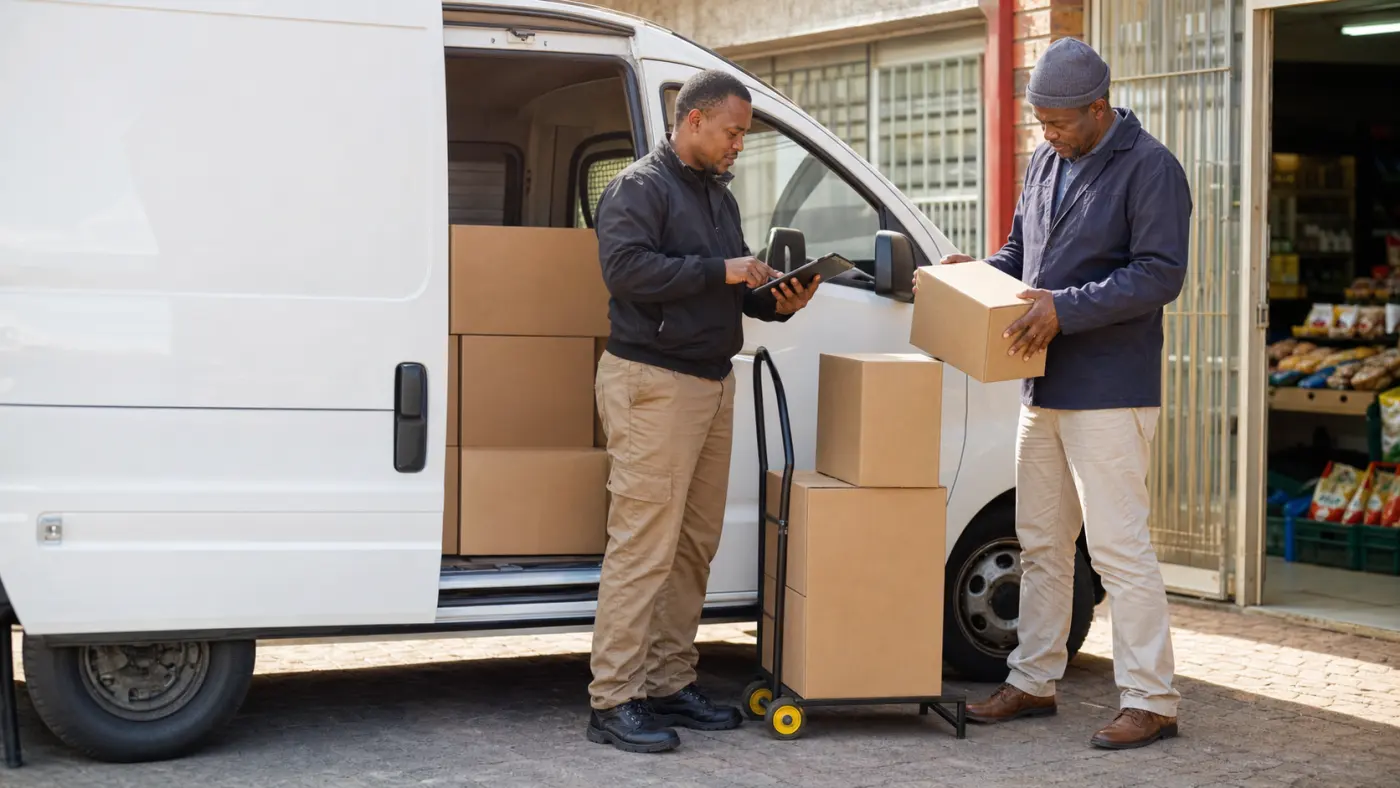
Direct store delivery, or DSD, is a distribution model in which a supplier or distributor delivers products directly to an outlet or customer location instead of relying only on a retailer’s central warehouse flow. The route may combine selling, order capture, delivery, stock handling, merchandising, returns and collection, depending on the business.
Route sales is the recurring commercial model organised around a set of customer stops. A route salesperson may take an order for later delivery, sell from vehicle stock, deliver a pre-sold order or perform a mixed role. Van sales is a common DSD pattern in which stock travels with the vehicle and transactions occur at the customer.
These terms overlap, but they are not exact synonyms:
- DSD describes the direct-to-location distribution model;
- route sales describes recurring selling and service along a route;
- van sales usually means vehicle stock is available for sale or delivery;
- pre-sales means a representative captures demand before warehouse picking and delivery;
- route accounting controls vehicle stock, documents, money and reconciliation across the route.
Common DSD operating models
Pre-sell and later delivery
A sales representative visits or contacts the customer, captures an order and sends it to office or ERP workflows. Warehouse staff allocate, pick and load stock. A separate driver delivers later.
This model separates selling time from physical fulfilment and can support wider ranges. It requires reliable hand-off status: accepted, rejected, out of stock, changed, scheduled and delivered.
Sell and deliver from the vehicle
The route salesperson starts with controlled vehicle stock, selects quantities at the customer, records the transaction, hands over goods and updates the vehicle book stock. This supports immediate fulfilment but makes stock, pricing, receipt and end-of-route controls critical.
Pre-sold delivery with merchandising
A route is loaded against confirmed orders. The delivery role may also rotate stock, place product, collect returns or verify displays. Delivery completion should not be confused with merchandising compliance; each needs suitable evidence.
Hybrid route
The route can deliver pre-sold lines, sell additional vehicle stock and take future orders. The system and policy must distinguish each transaction type so stock and revenue reconcile.
The complete DSD control chain
A DSD operation links physical product to customer and financial records. The chain is only as strong as its hand-offs:
- customer, route and service policy;
- product, price, tax, credit and promotion rules;
- demand or pre-order capture;
- order acceptance and stock allocation;
- picking, vehicle loading and load confirmation;
- route sequencing and departure control;
- delivery or sale at the customer;
- returns, damages, empties or rejected goods;
- payment or collection where applicable;
- closing vehicle stock and document reconciliation;
- finance, warehouse and customer-account posting;
- exception ownership and resolution.
A mobile “sale complete” screen cannot establish control if vehicle stock, credit notes or rejected deliveries are maintained separately without reconciliation.
Customer, route and call-cycle master data
Use a stable customer ID and maintain delivery address, coordinates where useful, contact and receiving information, service days, access windows, route assignment, price group, tax status, credit policy, payment method, equipment or returnable container information and active status.
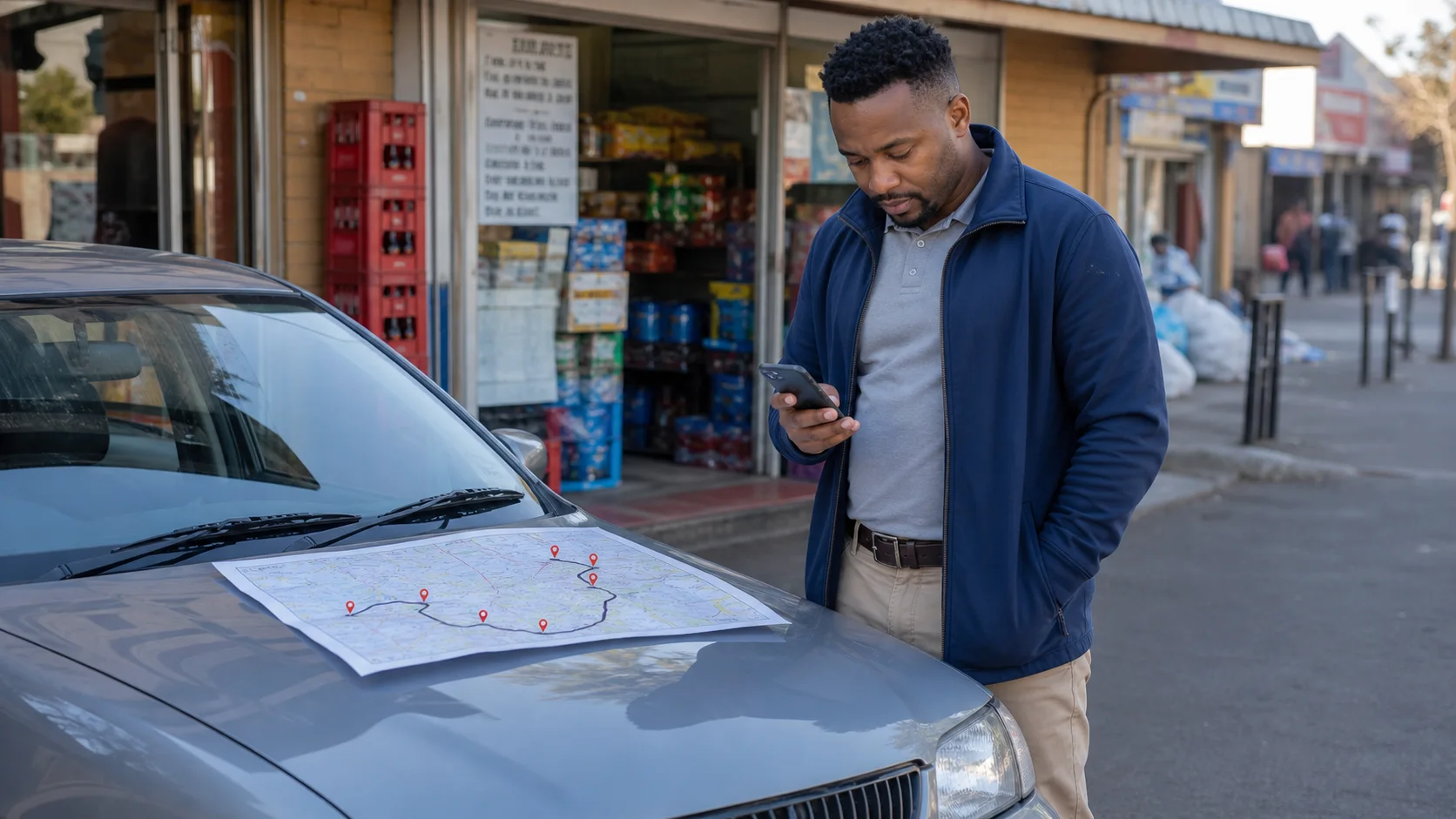
Separate the territory from the route. Territory is continuing ownership. A call cycle specifies recurring service. The daily route sequences selected stops. Temporary route changes should not silently transfer the commercial account owner.
Validate new customer records before using them for trade. Duplicate names, incorrect addresses and missing price groups can create stock and financial errors. Keep requested, approved, blocked and closed statuses explicit.
Product and price readiness
The route device may need a controlled subset of products, units of measure, pack conversions, tax, customer price lists, promotions, discount authority, return reasons and stock status.
Common causes of error include:
- selling a case but posting an each;
- using an expired price or promotion;
- allowing a discount outside authority;
- substituting a product without customer confirmation;
- promising vehicle or warehouse stock that is not available;
- confusing VAT-inclusive and VAT-exclusive values;
- losing the link between free goods and the promotion rule.
State which platform is authoritative. If ERP owns price, field software should preserve the price-version or effective context used and return exceptions for office review rather than create an uncontrolled local price.
Load planning and vehicle stock
For van sales, vehicle stock behaves like a controlled location. Opening stock must come from a confirmed load, transfer or prior closing balance under the approved process.
Record:
- route, vehicle and responsible person;
- load document and time;
- product, unit and loaded quantity;
- batch or expiry where required by the product and policy;
- additions and transfers during the day;
- each sale, delivery, return, damage, sample or other movement;
- closing physical count and book count;
- variance, reason, reviewer and resolution.
Do not create vehicle availability by subtracting unconfirmed draft orders. Define when a transaction reserves or reduces stock and what happens when it is cancelled.
Load planning should consider expected demand, vehicle capacity, product handling, route duration and replenishment options. Overstock increases handling and loss risk; understock creates missed sales and service failures.
Mobile order and sales capture
A usable field transaction begins with the right customer and route context. The representative selects products and quantities in an explicit unit, sees approved prices or permitted changes, reviews totals and records the correct transaction type.
The form should capture only required operational and financial data. Customer reference, delivery instruction, signature or proof may be appropriate in some models, but the organisation should define purpose, authority and retention.
Validation should cover:
- active customer and permitted trade status;
- product and unit validity;
- quantities and pack multiples;
- price, discount and promotion authority;
- vehicle availability or order availability rule;
- tax and total calculation;
- duplicate document or retry detection;
- required references and reasons;
- representative permission and route context.
After submission, show whether the transaction is draft, accepted locally, queued for sync, accepted by office, rejected, changed, delivered or cancelled. “Sent” is not the same as accepted.
Offline DSD operation
Routes may cross weak-connectivity areas, warehouses or stores. Offline support should be tested as a complete workflow.
The device may cache authorised customers, products, price rules, promotions, vehicle stock and open documents. Each cache needs a refresh time and expiry policy. Representatives should see which information could be stale.
Test:
- sign-in or session behaviour without a network;
- opening the assigned route;
- creating several sales and returns;
- duplicate taps and device restarts;
- price or customer changes made centrally while offline;
- vehicle-stock conflicts;
- reconnection with partial uploads;
- clear retry and rejection messages;
- reconciliation of local and central document IDs.
Some actions should wait for connectivity, such as current credit approval or an unusual discount. Make the limitation visible before the customer receives a promise.
Delivery evidence and customer acceptance
Proof of delivery may include receiver name, timestamp, signature, document, quantity confirmation, reason for shortage and suitable location or photo evidence. The exact evidence depends on policy, customer agreement and applicable requirements.
Separate:
- vehicle arrival;
- attempted delivery;
- accepted quantity;
- rejected or short quantity;
- return or redelivery requirement;
- financial posting status.
A signature image alone can be difficult to interpret if it lacks customer, document and receiver context. Conversely, collecting unnecessary identity data creates risk. Design for the actual acceptance question.
Returns, damages and expiries
Every physical return should use a controlled reason and disposition. Examples include saleable return, damaged product, expired product, customer rejection, quality issue, recall or delivery error.
Record the original document where possible, product, unit, quantity, condition, reason, authorisation, vehicle movement and downstream warehouse outcome. Do not use a generic negative sale for every case; finance, stock and quality consequences differ.
Products with batch, serial, temperature or expiry controls need specialised workflows and qualified operational design. Field software alone does not establish regulatory compliance.
Cash and collection control
Some routes collect cash or other payments. Define permitted methods, receipt sequence, custody, deposit, shortages, reversals and supervisor review. Restrict access to payment and customer-account data.
Reconcile:
Expected collections by accepted receipt
against
cash, approved electronic evidence and other permitted instruments handed over
Record differences and resolution. Do not net stock shortages, expenses and cash differences into one unexplained amount.
Where the route does not collect, make that boundary clear so mobile activity cannot be mistaken for a financial receipt.
End-of-route reconciliation
Reconciliation is the defining control for vehicle-stock sales.
A general stock equation is:
Opening vehicle stock + loads in + transfers in − sales/deliveries − transfers out − approved non-sale movements = expected closing stock
Compare expected closing with physical count by product and unit. Investigate variances with specific reason codes and evidence.
Also reconcile:
- loaded documents against confirmed load quantities;
- mobile transactions against central accepted documents;
- deliveries against invoices or fulfilment records;
- returns against received warehouse movements;
- collections against receipts and handover;
- issued document numbers against used, voided and unused numbers;
- route stops against completed, skipped and extra-stop reasons.
The close should produce an approval status, not merely a total. Material unresolved differences require an owner and due date.
DSD and ERP system boundaries
ERP or accounting software commonly owns products, tax, price, customer credit, warehouse stock, invoices and the general ledger. Field software may own route execution, mobile visit evidence, proposed orders and device sync. A route-accounting platform may bridge both.
Document each data contract:
- object and stable identifiers;
- sending and receiving system;
- create, update and status events;
- timing and freshness expectation;
- validation and rejection format;
- retry and duplicate behaviour;
- reconciliation control;
- human exception owner.
Avoid ungoverned spreadsheet imports that create new IDs on each run. Preserve source reference and integration batch.
DSD performance measures
Use balanced measures rather than route volume alone.
Customer coverage
Required calls completed, priority outlets served, productive calls and skipped-stop reasons. Define the eligible population and period.
Sales and distribution
Revenue or margin, orders, average order value, lines per order, numeric distribution, range compliance and new or recovered accounts.
Service
On-time delivery, fill rate, perfect-order rate, rejected deliveries, out-of-stock causes and exception resolution time.
Route efficiency
Distance and time per productive stop, calls per route under service-time context, planned-versus-actual sequence and overtime. Do not incentivise unsafe driving.
Control and data quality
Vehicle-stock variance, return rate by reason, cash variance, sync exceptions, duplicate documents and order rejection rate.
A top-line average can hide one route with serious recurring variance. Review by route, representative, product, customer segment and cause where suitable.
Route sales versus traditional delivery
Traditional delivery fulfils known orders. Route sales adds commercial choice at or before the stop. That choice affects product range, stock availability, price, customer interaction, incentives and representative skills.
A driver route can be optimised primarily around delivery windows and capacity. A route-sales plan must also consider account potential, service frequency, selling time and opportunity. The fastest sequence is not automatically the best commercial day.
Implementation roadmap
1. Map the real route
Observe loading, documents, device preparation, customer work, returns, collections and close. Record workarounds and exception owners.
2. Define transaction states
Agree when an order, sale, delivery, return, stock movement and payment becomes valid and which system owns each state.
3. Clean master data
Resolve customer, route, product, unit, price and vehicle mappings. A pilot cannot compensate for missing pack conversions.
4. Configure controls
Set roles, document sequences, price authority, stock rules, required evidence, offline boundaries and reconciliation tolerances.
5. Test full days
Use representative dense and long-distance routes, weak connectivity, partial delivery, customer rejection, return, device restart, duplicate sync and end-of-route variance.
6. Run a controlled pilot
Include warehouse, route, sales, finance and support staff. Reconcile every pilot day while volume is manageable.
7. Scale with support and monitoring
Train around real exceptions, monitor error queues and publish support ownership. Do not expand while unresolved stock or financial differences remain unexplained.
Questions decision-makers should ask
Sales and distribution leaders: Which model are we running—pre-sell, van sale, delivery or hybrid—and are incentives aligned with it?
Route managers: Can every skipped stop, rejected transaction and stock variance be acted on before the next route?
Warehouse and operations: Do loads, returns and closing stock reconcile in the same units and identifiers?
Finance: When does the field event become an order, invoice, payment or accounting entry, and can totals be traced?
CTO, CIO and developers: What works offline, how are conflicts and duplicate submissions handled, which APIs and logs exist, and where are integration errors owned?
Security and compliance: Are payment, customer, location, signature and employee records necessary, appropriately protected and retained?
Representatives and drivers: Can the workflow be completed under real route conditions without hidden retyping or unsafe distraction?
Final DSD readiness test
Select one product unit loaded onto a vehicle. The operation should be able to trace whether it remained in closing stock, moved to another location, was sold or delivered to a named customer, became a documented return or damage, and how the corresponding commercial record reached the authoritative system.
Select one customer commitment and confirm its office status and next owner. Select one variance and find its reason, approval and resolution.
When those chains are visible, direct store delivery becomes manageable rather than mysterious. The route is not only a sequence of stops; it is a controlled flow of customer service, physical stock, documents, money and evidence.