Table of Contents
Quick answer: what a sales territory plan must do
A sales territory plan turns a list of accounts or a geographic area into an explicit coverage commitment. It says which customers belong to the territory, what their potential and service needs are, who owns each relationship, how often each segment should be contacted, which objectives matter, and how the manager will detect under-coverage or excess workload.
The downloadable structure should therefore be treated as an operating workbook, not a decorative strategy document. It must connect account potential to realistic representative capacity. A territory with impressive opportunity but 160 hours of required work inside a 120-hour capacity envelope is not an ambitious plan; it is an unacknowledged service failure.
A strong plan answers five questions:
- What is in scope? Use stable account IDs, locations and ownership rules.
- Why does each account matter? Record potential, current value, strategic relevance and service obligations.
- What work is required? Translate segments into contact frequency, visit duration and follow-up effort.
- Can the owner do the work? Include travel, administration, leave, meetings and realistic working time.
- How will the plan change? Define review triggers, handovers and dated approvals.
Territory planning starts with a clean account universe
Do not design territories from a sales total alone. Begin with the complete account universe, including active customers, dormant customers, prospects, temporarily closed outlets, named strategic accounts and accounts whose location or ownership is uncertain. Give every record a stable identifier so name variations do not create duplicates.
At minimum, capture:
- account ID and trading name;
- physical location and usable latitude/longitude where available;
- account status and segment;
- current owner and any protected relationship owner;
- historical sales, margin or orders for a stated period;
- estimated potential and the method used to estimate it;
- required service frequency and typical service time;
- access windows, preferred contact method and operational constraints;
- open opportunities, service issues and material risks;
- last meaningful contact and next planned contact.
Separate facts from estimates. Historical revenue is observed; market potential is estimated. A planning model can use both, but a manager should be able to distinguish them and challenge the estimate without changing the source fact.
Resolve duplicate, missing and orphan records
Duplicate accounts distort potential, capacity and coverage. Missing coordinates distort travel estimates. Orphan accounts appear in the master list but have no accountable owner. Before modelling a new allocation, create exception lists for all three and resolve the material records first.
Do not silently delete an account because it looks inactive. Record the status, reason, owner and next review. An apparently dormant customer may be a lost account worth recovering, a closed business or simply a duplicate under another name.
Segment accounts by service need and potential
Segmentation should change a decision. If every segment receives the same call frequency, offer and review, the labels add administration but no value.
A practical model often combines:
- commercial potential: expected revenue, margin, category opportunity or share of wallet;
- current value: actual recent performance and payment quality;
- service requirement: replenishment, merchandising, technical support or relationship frequency;
- strategic relevance: reference value, network influence, contract status or growth priority;
- cost to serve: travel, time, complexity and support burden;
- risk: churn, credit, competitor activity, compliance or supply constraints.
Avoid using revenue alone. A high-revenue account may already be mature and stable, while a smaller account may have strong untapped potential. Conversely, a theoretically attractive account can consume disproportionate time or carry unacceptable credit risk.
For each segment, define a standard contact policy: visit frequency, remote contact frequency, expected visit purpose, normal duration, required evidence and escalation rule. Permit documented exceptions when the local reality demands them.
Convert contact policy into required workload
The core capacity calculation is simple in principle:
Required territory hours = service hours + travel hours + follow-up hours + administration + fixed duties
Service hours can be estimated as:
Accounts × required contacts per period × average contact duration
Travel must be modelled separately. Ten one-hour visits do not fit into ten hours if they are dispersed across a province. Use representative route samples or historic travel data, and include time from the normal start point, between calls and back to the appropriate end point.
Then add non-visit work: quotations, customer messages, data correction, order queries, planning, internal meetings, training, leave and unavoidable disruption. Capacity should reflect productive working time, not every hour on a calendar.
Example capacity test
Suppose a representative has 128 realistic field and follow-up hours in a four-week cycle. The account plan requires 82 hours on site, 31 hours of travel, 14 hours of follow-up and 12 hours of fixed administration. Required time is 139 hours, an 11-hour deficit before unexpected events.
The manager must then change a constraint: reduce frequency for a lower-priority segment, shift appropriate contacts to remote service, move accounts to another territory, improve routing, add capacity or change the service promise. Telling the representative to “be more productive” does not resolve the arithmetic.
Define ownership without creating customer confusion
Ownership can be geographic, account-based, channel-based, product-based or hybrid. Pick the model that matches the buying process and make conflict rules explicit.
Geographic ownership works well for dense, recurring coverage. Named-account ownership suits complex relationships that span locations. Channel ownership can reflect distinct wholesale, retail, healthcare or industrial motions. A hybrid may give a key-account manager commercial ownership while a local field representative owns routine execution.
For hybrids, define:
- who may contact which stakeholder;
- who owns the opportunity, order, visit and issue;
- how revenue or commission credit is treated;
- who receives alerts and prepares the account plan;
- what happens when the customer operates across territories;
- which role makes the final decision when responsibility conflicts.
Never rely on unwritten custom. Ambiguity produces duplicate visits, missed follow-ups and disputes that the customer experiences as disorganisation.
Set territory objectives that representatives can execute
A territory objective should combine an outcome with an operating change. “Grow sales by 15%” describes a desired result but not the account work likely to produce it.
Better territory objectives include:
- recover 20 dormant high-potential outlets through a defined reactivation sequence;
- improve required A-segment coverage from 72% to 90% while maintaining visit quality;
- add an agreed product range to 40 eligible accounts;
- reduce overdue priority follow-ups below a defined threshold;
- increase productive visits without increasing unsafe or excessive travel;
- resolve the top availability cause in a named customer group;
- build qualified pipeline in an underrepresented industrial segment.
Each objective needs an owner, baseline, target, due date, evidence source, dependencies and review cadence. If stock, credit, marketing or technical support is a dependency, name the supporting owner rather than making the sales representative solely accountable.
Build the account action plan
The account-level sheet is where strategy becomes work. For each priority account, record the objective, opportunity or risk, next action, action owner, due date, required support and current evidence.
Use a specific next action. “Follow up” is not enough. “Send revised range proposal to procurement contact by 14 August and request a 30-minute review” is observable. Close or replace past-due actions during the review instead of repeatedly moving the date without explanation.
Do not force detailed action plans for every low-value account. Segment rules can govern routine coverage, while account-specific plans are reserved for strategic, high-potential or exception accounts.
Connect territory plans to call cycles and routes
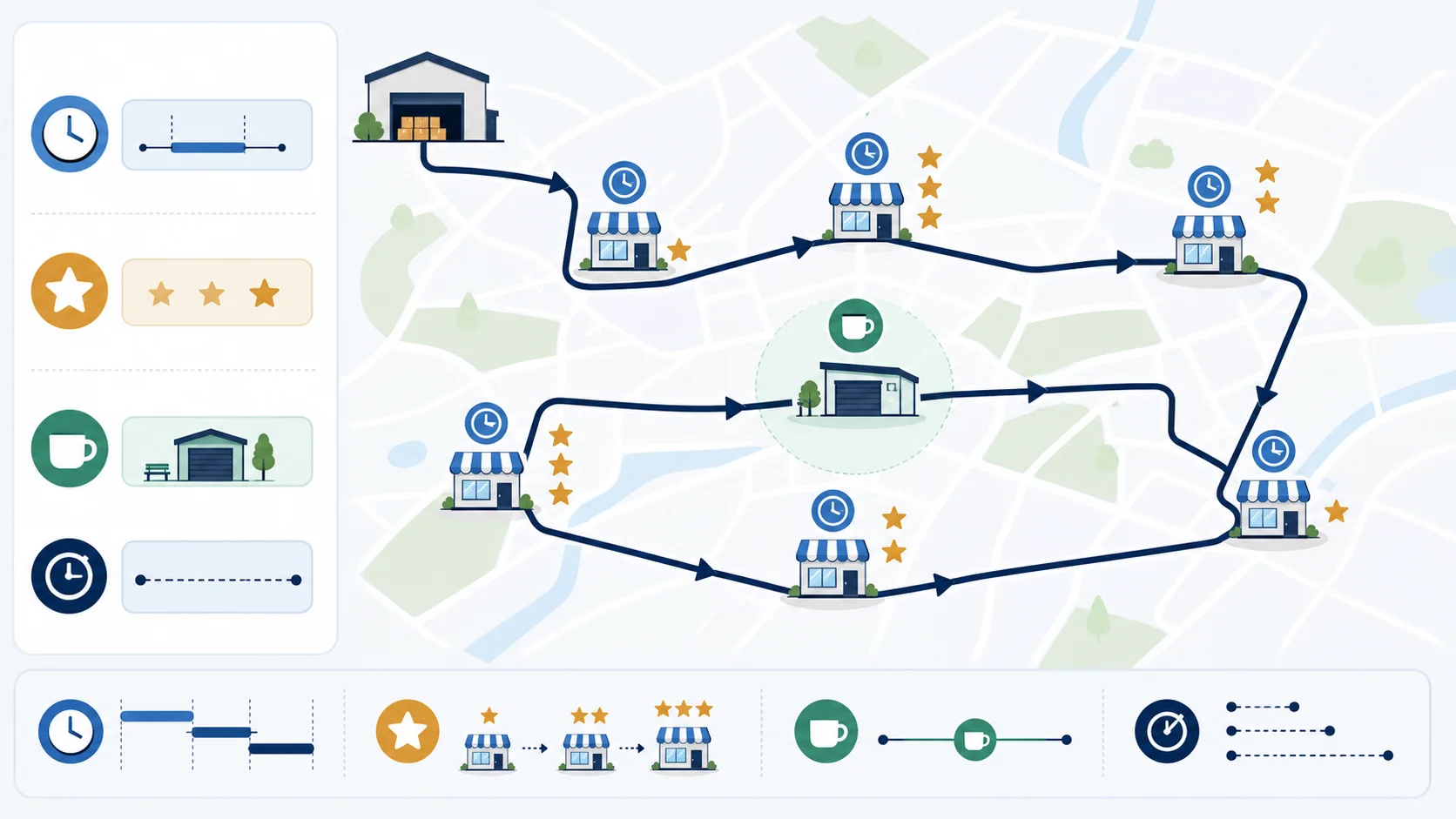
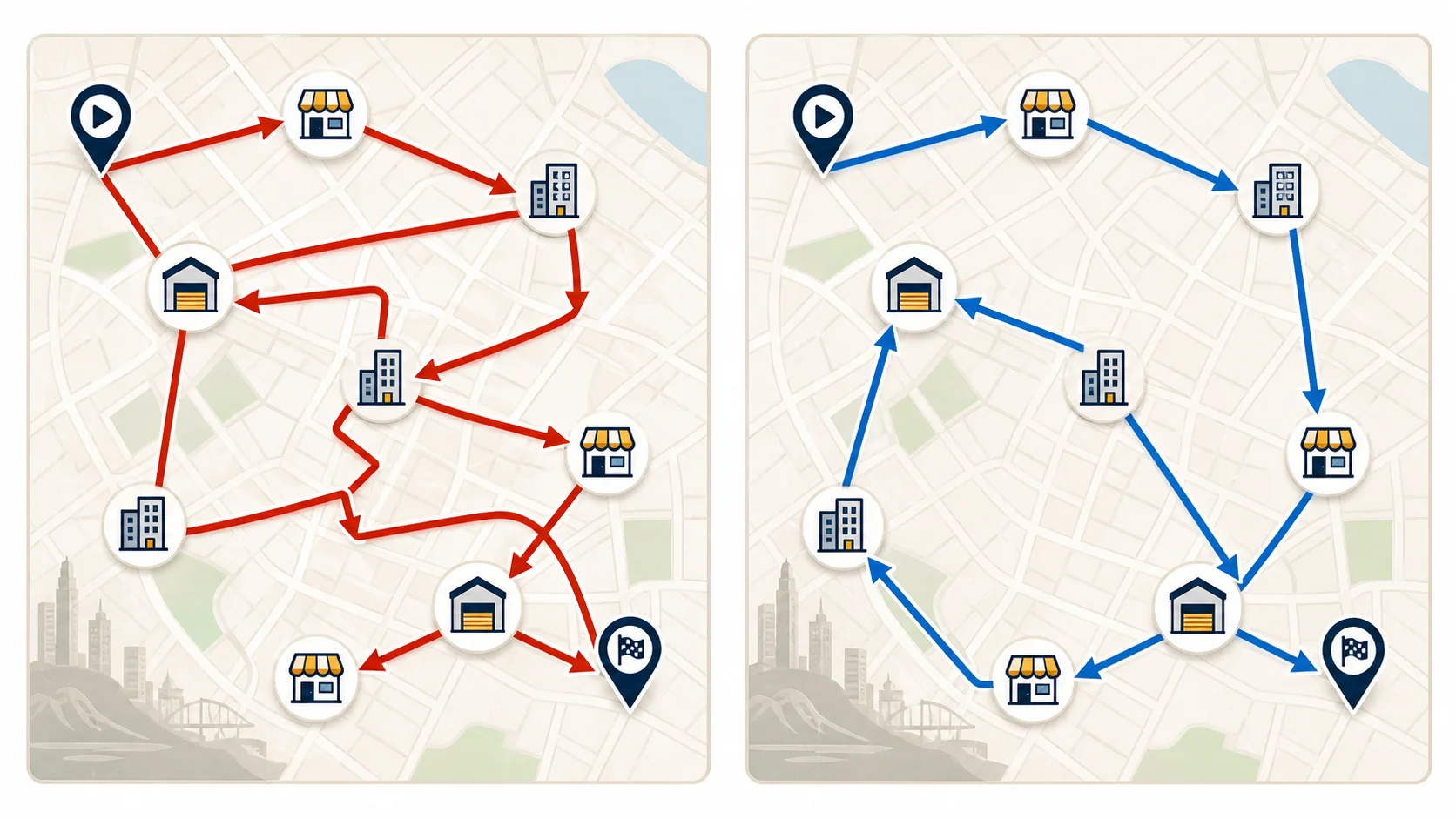
A territory is an ownership and coverage construct. A call cycle determines how frequently accounts should be considered for contact. A route orders a selected group of physical visits for a particular day. Keeping these layers separate prevents route convenience from replacing commercial priority.
The correct sequence is:
- establish the eligible territory universe;
- apply segment frequency and overdue-account rules;
- identify fixed appointments and time windows;
- select the calls that belong in the planning period;
- optimise or manually sequence the selected physical stops;
- publish the plan and preserve changes or skipped-stop reasons;
- compare planned coverage with completed, productive outcomes.
Do not route every account merely because it is nearby. Do not visit an account repeatedly because it is convenient while distant priority customers become overdue.
Use coverage measures with explicit denominators
Coverage is easy to misstate. Define the population and window.
Required-call completion = completed required contacts ÷ required contacts due × 100
Account coverage = eligible accounts with at least one qualifying contact ÷ eligible accounts × 100
These are different measures. A representative can contact every account once and still miss the required frequency for high-priority accounts.
Also distinguish completed from productive visits. A completed visit may prove presence and data capture. A productive visit meets the agreed outcome rule, such as an order, qualified next step, resolved execution task or meaningful customer decision. State which outcomes qualify.
Review coverage by segment, geography and owner. A territory-wide average can hide missed A accounts behind repeated low-priority contacts.
Manage whitespace, prospects and new territories
Territory plans must cover more than current customers. Create a prospect universe with source, fit criteria, location, estimated potential, current status and next action. Separate validated prospects from unverified names.
For a new territory, start with market hypotheses and discovery milestones rather than false precision. Require the owner to validate account locations, buying structures, service patterns, competitor presence and realistic travel. Update potential estimates with a dated reason as evidence improves.
Whitespace analysis asks where potential exists without suitable coverage. This may mean an unserved geographic pocket, a product range absent from existing accounts, a customer segment with low distribution or a strategic network not yet developed.
Plan controlled handovers
When ownership changes, preserve customer and operational continuity. Freeze a dated account list and identify open quotations, orders, commitments, service issues, personal contacts, negotiated terms, visit expectations and risks.
A useful handover records:
- outgoing and incoming owners;
- effective date and temporary cover period;
- priority accounts requiring a joint introduction;
- outstanding actions and their due dates;
- active opportunities and evidence-based stage;
- route, access and contact constraints;
- customer communication status;
- manager review after the first coverage cycle.
Historical activity should remain attributed to the original owner even when future responsibility changes. Rewriting history makes performance and customer context unreliable.
Rebalance territories using durable evidence
Territories should not be changed every time one month is weak. Rebalance when a durable mismatch exists in potential, required workload, travel, strategic focus, team capacity or account structure.
Use several views together:
- potential and current performance;
- required hours versus available capacity;
- travel and geographic coherence;
- overdue priority coverage;
- opportunity and risk distribution;
- relationship or specialist constraints;
- target attainability under comparable assumptions.
Model the proposed allocation before publishing it. Compare account counts, potential, service hours and travel, then review exceptions with managers and representatives. A mathematically equal allocation may still be commercially poor if it breaks key relationships or joins disconnected geographic pockets.
Version the approved allocation, record the rationale and state the effective date. This creates a fair baseline for later performance review.
Territory review cadence
Use different cadences for different decisions.
Daily or near-daily: urgent customer, route, stock and service exceptions.
Weekly: overdue priority calls, next actions, route changes, coverage gaps and support blockers.
Monthly: segment coverage, orders, revenue or margin, pipeline, new accounts, lost accounts, data quality and workload signals.
Quarterly: potential estimates, service policy, capacity, account migration and rebalance proposals.
Annual or strategy cycle: market coverage model, headcount assumptions, channel design and target methodology.
Record decisions, owners and due dates. A review that produces no action is reporting, not management.
Data quality and governance checklist
Before relying on the plan, confirm that:
- every in-scope account has a stable ID and status;
- duplicates and missing locations are visible exceptions;
- potential is dated and its estimation method is known;
- segment definitions and contact policies are approved;
- capacity assumptions include travel and non-selling work;
- ownership and hybrid conflict rules are explicit;
- performance formulas use the correct population and period;
- manual overrides carry a reason and approver;
- prior territory versions can be recovered;
- representatives see only suitable customer and personal data;
- exported workbooks are controlled and old copies are retired.
South African organisations should also assess POPIA responsibilities, access control, retention and secure handling for personal information in contact, location and activity records. The template is an operating aid, not legal advice.
When a spreadsheet is enough—and when it is not
A spreadsheet can support an initial design, a controlled quarterly review or a small team with one accountable owner. It is useful because assumptions are visible and scenarios are easy to compare.
Risk rises when territories change frequently, many users edit separate files, account data is sensitive, mobile execution must reflect current ownership, route and visit records feed performance, or managers need a live auditable view. At that point, use software with role controls, stable records, assignment history, mobile access and integrations, while retaining a documented planning policy.
Do not automate an unclear ownership model. First agree the rules, then configure the system and test realistic boundary cases: shared accounts, temporary cover, new outlets, departed representatives, conflicting imports and accounts exactly on a geographic boundary.
Implementation plan
Week 1: establish the baseline
Clean the account universe, agree the period for current performance, map material locations and identify missing ownership. Document the present contact policy rather than assuming everyone uses the same one.
Week 2: model potential and workload
Agree segmentation criteria, estimate potential, calculate service and travel demand, and compare required work with representative capacity. Make low-confidence estimates visible.
Week 3: design and review allocations
Create candidate territories, test workload, geographic coherence and relationship constraints, then review exceptions with sales, operations and finance. Draft handovers for affected accounts.
Week 4: publish and pilot
Publish the dated allocation, call-cycle policy, account objectives and first routes. Monitor missing accounts, owner conflicts, excessive travel and priority coverage during a representative cycle.
First 90 days: learn before optimising again
Review evidence at 30, 60 and 90 days. Correct data and urgent allocation problems, but do not repeatedly redesign the model before a normal cycle has produced enough evidence.
Questions each decision-maker should ask
Sales leadership: Does the model place enough capacity against the best opportunity, and are targets attainable under the same assumptions?
Regional managers: Which priority accounts are under-covered, which territories are overloaded and what action follows this week?
Representatives: Is ownership clear, is the service promise possible, and can I see why each priority call matters?
Operations: Do the planned contacts match stock, delivery, service and support capacity?
Finance: Are value, margin, credit and cost-to-serve assumptions controlled and reconcilable?
IT and data teams: Which system owns accounts, assignments and outcomes; how are conflicts handled; and can prior versions be audited?
Executives: Are we making a durable market-coverage decision, or merely moving account rows until totals look equal?
Final territory-plan test
The plan is ready when a manager can select any account and answer who owns it, why it matters, what service is due, what the next action is, what evidence supports the potential estimate and how the work fits inside capacity. A representative should be able to turn the plan into an achievable week. Leadership should be able to see which assumption must change when the plan does not fit.
That is the purpose of the template: a transparent bridge from market opportunity to accountable, realistic customer coverage.