Finance and ERP owner
Is Sage 300 already supported?
No. SalesPro Hub has the API and Enterprise runtime foundations, while the Sage 300 product adapter, licensed test fixture and acceptance evidence remain to be completed.
ERP and accounting
SalesPro Hub can provide customer, order, inventory and status APIs plus an Enterprise managed Windows runtime for a Sage 300 project, but a native managed Sage 300 adapter is not released. The exact Sage 300 edition, deployment, licensed integration interface, companies, currencies, customers, items, locations, taxes and sales-order lifecycle must be scoped, implemented and reconciled before support is advertised.
Test the field workflow firstSupport level: Enterprise integration plan — managed Sage 300 adapter not released. The workflow below separates shipped SalesPro Hub capabilities from connector work your implementation must provide.
Client-provided ERP licence required: SalesPro Hub Enterprise covers the managed connector service only. It does not include or resell the ERP product, ERP modules, API, SDK, e.net, runtime, user or vendor-partner licences. The client must provide and maintain every third-party licence, supported integration interface, vendor permission and licensed test or production environment required by their ERP.
What this solves
A likely South African deployment places the SalesPro Hub connector on a customer-controlled Windows server that can reach the approved Sage 300 application or integration interface. SalesPro Hub owns the rep’s offline field workflow and submitted order; Sage 300 can remain the accounting and ERP record once an implemented adapter validates company, customer, item, location, price, tax and document rules. Multi-company and multi-location buyers need an explicit selection policy, and finance must choose the document and posting state. The managed runtime solves enrolment, outbound hub communication, durable processing, monitoring, remote settings and upgrades, but it does not replace the missing Sage 300 product-specific adapter.
Sage 300 integration evidence
A useful Sage 300 connection needs stable identities, explicit ownership and a visible exception path. These are the SalesPro Hub records the implementation must map and reconcile.
Written and maintained by Paul · Updated 7 August 2026
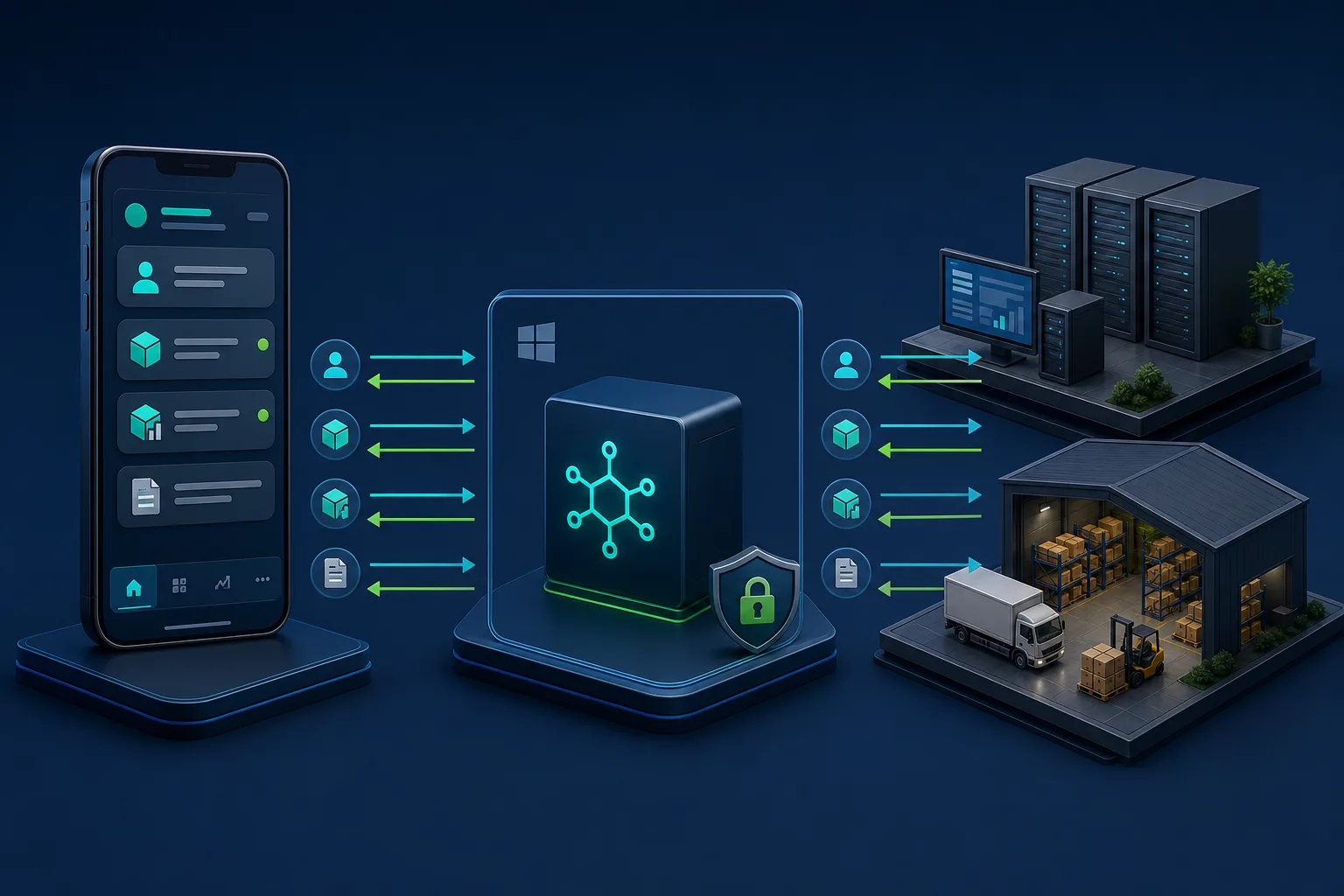
The planned deployment uses a managed outbound hub connection while the adapter reaches the licensed Sage 300 surface selected by the buyer.

Multi-company selection, customer and item identities, locations, prices, currencies, tax and document state need approval before an adapter is built.
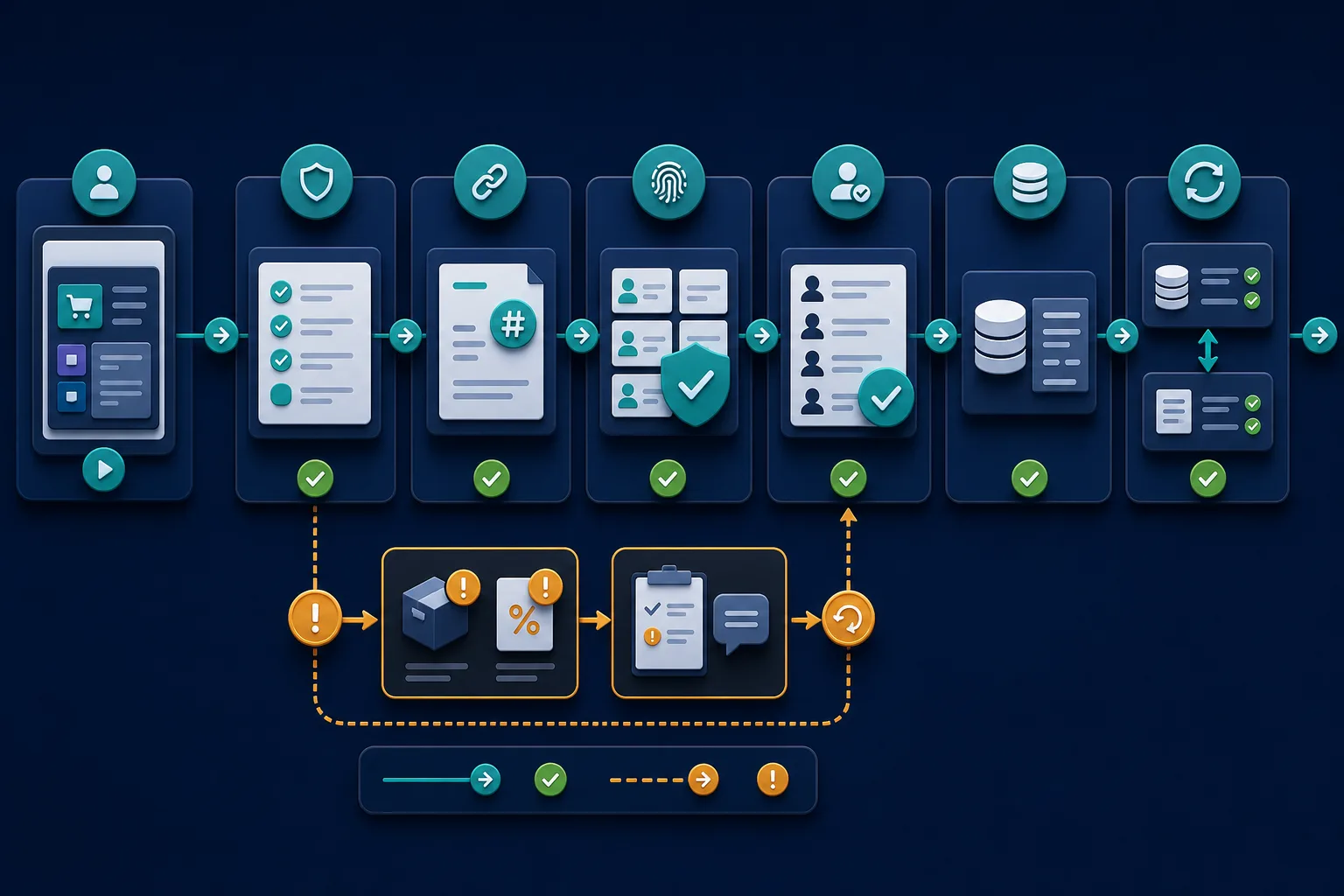
A future adapter must validate before commit, store the external result and reconcile a lost response rather than creating another Sage 300 document.

Every operation needs an approved company and location policy, with ambiguous or unmapped values stopped for review instead of silently defaulted.

The Enterprise runtime can make version, approved settings and failures visible, while the product-specific Sage 300 adapter remains a separate release gate.

The release decision should compare both systems and prove duplicates, restarts, credential changes, monitoring and exception ownership for the exact Sage 300 version.
Architecture and ownership
The planned Sage 300 pattern uses a customer-controlled Windows host when the ERP and approved integration interface sit inside the office network. SalesPro Hub exposes the tenant customer, order, inventory and status contracts; a product-specific adapter would select the company, validate the customer and item identities, apply location, currency, tax and document rules, then return the durable Sage 300 reference. The managed runtime is available as an Enterprise foundation, but no Sage 300 adapter is released.
Sage 300 normally owns the official company, customer number, item number, location, accounting document, tax result and ERP reference after commit.
SalesPro Hub owns mobile drafts, visit and outlet context, the submitted field order and its stable source number.
Finance must select the document type, posting state, currency, price, tax and credit policy rather than leaving those choices to connector defaults.
Stock direction, available quantity, multi-location allocation and fulfilment status each need one declared owner and refresh rule.
Run the connector under a dedicated least-privilege Windows service identity and use the Sage 300 access contract approved by the customer and implementation partner. Company, host and non-secret fields may be versioned remotely; credentials remain write-only and protected locally. Restrict outbound destinations, logs and local folders, record the runtime and adapter version, and keep a narrow local recovery procedure for failures that prevent the agent reaching the hub.
Failure recovery
A useful Sage 300 integration is not defined by one successful demo. It is defined by what remains durable, what can be replayed safely, what must stop, who sees the exception and how both systems are reconciled.
| Failure or conflict | Required response |
|---|---|
| Wrong or unavailable company | Reject activation or the operation explicitly; never fall back to another Sage 300 company. |
| Unknown customer, item or location | Quarantine the mapping error for the responsible ERP or finance owner without creating a partial document. |
| Currency, VAT or total mismatch | Stop before posting or mark the external result unreconciled; do not hide rounding and accounting-policy differences. |
| Lost response after document creation | Use the stable source reference and result store to find the committed Sage 300 document before another attempt. |
| Credential, host or service failure | Preserve pending work, validate an approved configuration change and recover under the same operation identities after service restoration. |
Acceptance plan
A sandbox proves API syntax. Production readiness requires representative identities, accounting or CRM rules, failures and reconciliation. Record the result against the exact product edition and adapter release; do not transfer evidence from a different vendor version by assumption.
Delivery lifecycle
Treat the connection as a small operational product with owners, release evidence and a lifecycle. These phases stop a promising prototype from becoming an invisible production dependency that only one developer understands.
Name the exact Sage 300 product, edition, company or tenant, licensed interface and deployment. Follow one representative customer and order from field capture to its final external state. Record current manual checks, approval points, cut-off times, volumes and the people who resolve errors. Brand-level assumptions are not a technical scope.
List required and optional fields, types, formats, allowed values and stable identities. Declare a source of truth for customers, outlets, products, prices, tax, stock, documents and status. Define create, update, deactivate and delete behaviour separately. Include the idempotency key, cursor or event identity and the external reference returned after a successful commit.
Classify authentication, rate-limit, connectivity, validation, mapping, conflict and external-service errors. Decide which faults retry, how often and with what backoff; which stop immediately; and where exhausted work becomes visible. Assign a named business or technical owner and define the evidence needed to replay, correct, reject or manually reconcile an operation.
Use representative South African customers, addresses, SKUs, rand values, VAT rules, discounts, warehouses and approval cases. Include duplicates, missing mappings, offline or network loss, service restart, expired credentials and a lost response after external commit. Reconcile counts and commercial totals in both systems; a green API response alone is not acceptance.
Version the mapping, adapter and configuration together. Record the approved package, supported architectures, required runtime, database or API prerequisites and the previous known-good state. Start with a bounded customer or order cohort, monitor exceptions and keep a tested way to pause new work without deleting the durable queue or losing reconciliation evidence.
Monitor reachability, authentication, latency, retry and dead-letter trends, external rate limits, installed version and reconciliation differences. Rotate credentials and exercise recovery before an emergency. Review vendor API or SDK changes and the adapter support matrix before upgrades. Retire obsolete credentials, mappings and data under the agreed security and POPIA operating process.
Decision-maker intent
Finance and ERP owner
No. SalesPro Hub has the API and Enterprise runtime foundations, while the Sage 300 product adapter, licensed test fixture and acceptance evidence remain to be completed.
Sales operations
Yes. The field workflow can be proved independently. Automatic Sage 300 hand-off remains off until mapping and acceptance are approved.
CTO, CIO and IT
Routine approved adapter settings can be delivered and validated through the Enterprise control plane. A machine or network failure that breaks that channel still needs local break-glass support.
Development partner
Evidence must cover the exact version and interface, mapping, concurrency, idempotency, restarts, credentials, monitoring, upgrades, rollback and financial reconciliation.
Professional includes scoped APIs and signed webhooks for custom, customer-operated middleware. A managed Windows connector, remote configuration, heartbeat/version monitoring and managed recovery require Enterprise—and only become available for this named system after its real adapter passes the published release boundary.
Buyer decision guide
A good trial should prove the workflow with your data—not rely on a sales promise.
Implementation flow
Record version, deployment, companies, modules, licensed interfaces, service identity, network path and the Sage implementation partner responsible for ERP-side access.
Decide which system owns customer details, items, locations, prices, currencies, VAT, stock, field-order approval, Sage documents and fulfilment status.
Map customer and item identities, company, location, unit, price list, tax group, salesperson, reference and the document state selected by finance.
Read only authorised submitted orders, preserve a stable source reference, validate the entire document and return the durable Sage 300 identity after commit.
Exercise network loss, server and connector restarts, invalid mappings, credential rotation, configuration rollback, lost responses and signed upgrade control.
Finance, operations and IT compare counts, quantities, rand totals, VAT, Sage document numbers and exceptions before the exact adapter version is released.
| SalesPro Hub field/event | Sage 300 equivalent | Implementation note |
|---|---|---|
| tenant/company policy | Sage 300 company | Bind each operation to one approved company; never infer it from a customer name. |
| customer.external_id | Sage 300 customer number | Use the stable ERP account identity and define bill-to and ship-to behaviour. |
| items[].sku | Sage 300 item number | Validate units, inactive items, alternatives and location availability. |
| items[].warehouse | Sage 300 location | Define defaults, splits and invalid-location handling explicitly. |
| order_number | Customer PO or approved reference field | Retain one stable source identity for replay lookup and reconciliation. |
| external_reference | Sage 300 order identity and number | Write back only after the external transaction is durable and queryable. |
| total and tax | Sage 300 document values | Reconcile currency, inclusive or exclusive values, tax groups and rounding. |
No. The SalesPro Hub API and managed Windows runtime are implementation foundations, but the product-specific Sage 300 adapter and acceptance evidence are not released.
A custom connector can implement that workflow after the company, customer, item, location, price, tax and document rules are approved. Automatic managed posting is not currently available.
That is the likely managed deployment when Sage 300 is customer-hosted. The final location depends on the supported interface, network path and customer security architecture.
For an implemented adapter, approved schema fields can be pushed as versioned settings, secrets remain write-only, and the connector validates locally before activation. A broken machine or hub channel still needs local break-glass access.
The implementation must bind every tenant or operation to an approved company and define the location selection policy. Ambiguous or unmapped values should fail visibly rather than default silently.
Test representative mappings and documents, VAT and currency, duplicates, concurrent retries, lost responses, restarts, credential rotation, monitoring, upgrades, exception ownership and full reconciliation against the exact Sage 300 version.
SalesPro Hub Enterprise covers the managed connector service only. It does not include or resell the ERP product, ERP modules, API, SDK, e.net, runtime, user or vendor-partner licences. The client must provide and maintain every third-party licence, supported integration interface, vendor permission and licensed test or production environment required by their ERP.
Connected buying journey
Review the managed runtime, ERP, accounting, CRM and automation options before choosing a delivery model. Every page publishes its current support boundary, required custom work and Enterprise plan status.
Import real products and customers, capture a representative order, then scope the integration against evidence instead of assumptions.